
The short answer
Borough Park homes should have their chimneys and vents inspected once a year, as the NFPA 211 standard recommends. Most homes need a Level 1 inspection. A Level 2 is needed after a boiler change, an oil-to-gas conversion, or a home sale, and a Level 3 is needed only when a hidden problem has to be reached by opening part of the chimney.
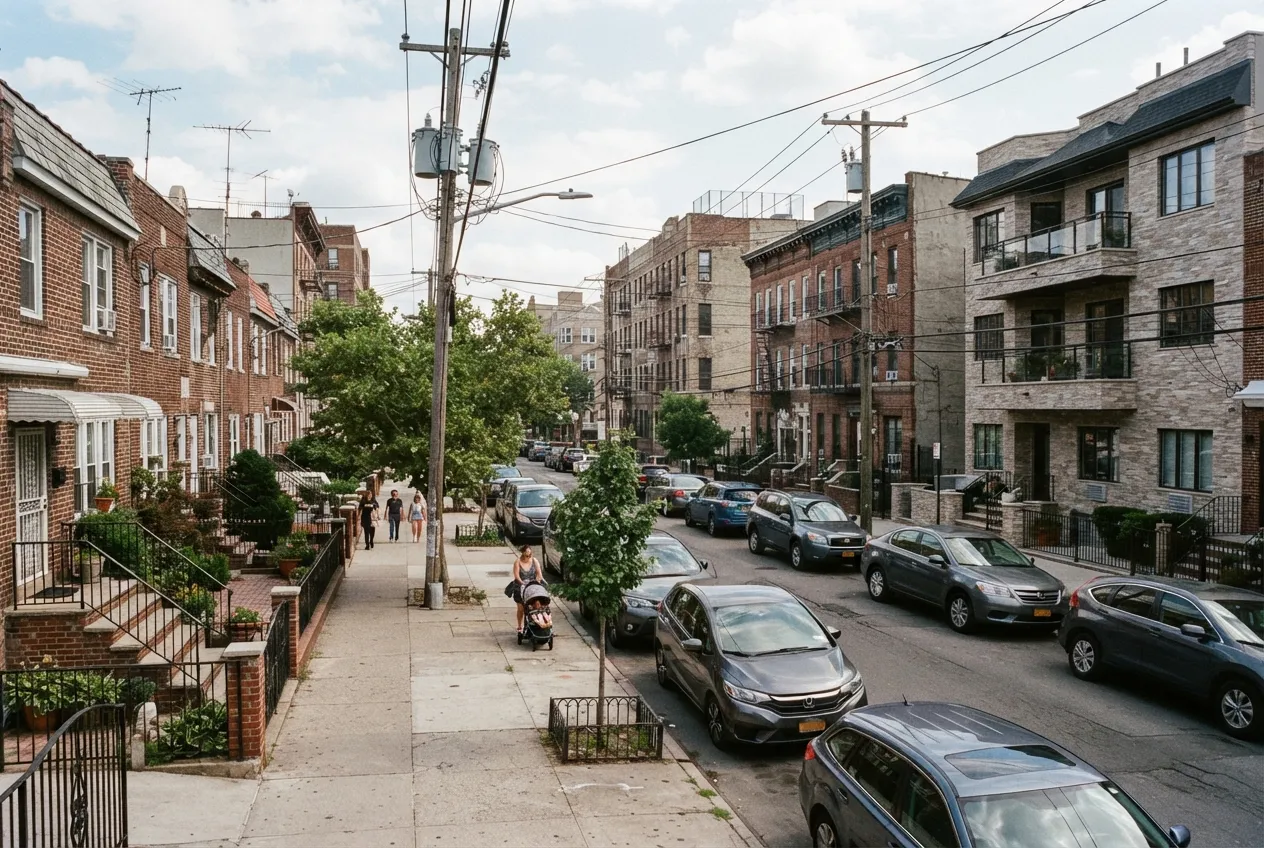
A chimney can look fine from the sidewalk and still have a cracked flue tile, a gap in the liner, or a connector pipe that no longer fits the appliance venting into it. GoldenFlue Chimney Services inspects chimneys across Borough Park in ZIP code 11219. That includes attached rowhouses, two-family homes, detached houses, and pre-war apartment buildings. Our office is in Bay Ridge, about 2 miles west, so Borough Park is a short drive for our crew. Our certified technicians follow the NFPA 211 standard, which calls for chimneys, fireplaces and vents to be inspected once a year. After every inspection we tell you plainly what we found, what it means, and what needs to happen next, if anything.
Which inspection level your Borough Park home needs
Chimney professionals use three inspection levels. The right one depends on what has changed in your home, not on how old the house is. We'll ask a few questions when you book so we arrive ready for the right job. If we find something during a basic inspection that calls for a closer look, we'll explain why before going further.
- Level 1: For a chimney and heating system that haven't changed since the last inspection. We check the accessible parts of the chimney, the flue, and the appliance connection to confirm the system is sound and clear.
- Level 2: For when the system changes, such as a new boiler or water heater or a switch from oil to gas, or when the home is being sold. This includes a camera inspection of the flue's interior.
- Level 3: For when a suspected hazard is hidden and can only be reached by removing part of the chimney or building, such as a section of wall or chase. We only recommend this when the evidence points to it.
Boilers, oil-to-gas conversions and chimney liners
Many homes and small apartment buildings in Borough Park are heated by a boiler that vents through an older masonry chimney. That chimney may have been built long before the current equipment was installed. When a New York City building converts its boiler from oil to gas, the chimney has to be evaluated as part of the work.
A new liner is often needed in these conversions. Gas exhaust produces acidic condensate that can corrode a masonry flue. If you are planning a conversion or have already done one, we can inspect the flue and tell you whether the existing liner is suitable or a new one is needed. We can also check that the liner size matches the new appliance.
What we check during a chimney inspection
Rowhouse and attached-home chimneys often share walls and rooflines with neighboring buildings, and detached homes have their own exposure to weather. We look at the whole system, from the appliance or firebox up to the top of the chimney, wherever it is safely accessible.
- Flue tiles or liner, for cracks, gaps, and corrosion
- Soot and creosote buildup inside the flue
- The connector pipe between the boiler or water heater and the chimney
- Smoke chamber, damper, and firebox on wood-burning fireplaces
- Chimney crown, cap, and mortar joints, for weather damage
- Signs of water entry, such as staining, efflorescence, or rust
- Blockages from debris, nests, or fallen masonry
Scheduling around heat season
New York City's heat season runs from October 1 through May 31. During those months, building owners must keep apartments heated to the city's minimum temperatures. If you own a two-family home or a small multifamily building and rent out units, a chimney problem found in January is harder to handle than one found in August.
Late spring and summer are good times to book an inspection. If repairs or a liner are needed, there is time to complete them before the boiler is running every day. Homeowners with wood-burning fireplaces benefit from the same approach, because the work is done before the first fire of the season.
After the inspection
When we finish, we walk you through what we saw and share photos or camera images where we were able to capture them. We put our findings in writing so you have a record. If the chimney is in good shape, we'll tell you that. If something needs attention, we'll explain the issue, how urgent it is, and your options.
We also inspect chimneys in nearby Dyker Heights, Sunset Park, Bensonhurst, Bay Ridge, and Bath Beach. If you own property in more than one of these neighborhoods, we can schedule the visits together.
More services in Borough Park
- Chimney Sweep in Borough Park
- Chimney Repair in Borough Park
- Air Duct Cleaning in Borough Park
- Chimney Liner Installation in Borough Park