The short answer
A chimney sweep removes soot, creosote and debris from your flue so smoke and exhaust vent safely and buildup is less likely to ignite. The NFPA 211 standard calls for an inspection once a year, and sweeping is done when the inspection shows buildup or blockage. Our certified crew protects your home with drop cloths and HEPA vacuums and explains everything we find.
A chimney does its job quietly until something goes wrong. Every fire you burn and every season your boiler or furnace runs leaves deposits behind: soot, creosote, and debris that narrow the flue and can catch fire. GoldenFlue Chimney Services sweeps chimneys for homeowners in Brooklyn and nearby communities, from wood-burning fireplaces in older rowhouses to flues serving gas and oil heating equipment. Our certified technicians clean the flue, check what they can see along the way, and explain what they found in plain terms. This page covers the signs that your chimney needs attention, what a sweep includes, how we work inside your home and on the roof, the standard we follow, what affects the price, and what to expect on the day of your visit.
Signs you need a chimney sweep
Many homeowners call us after noticing something small that turns out to be connected to the chimney. If you see or smell any of the following, it's a good time to schedule a sweep and inspection, ideally before you light the next fire or before the heating system starts working hard for the season.
- A smoky or tar-like creosote smell from the fireplace, especially on humid days or when the air conditioning runs
- Poor draft: smoke rolls into the room instead of rising, or fires are hard to start and keep going
- Black flakes, soot, debris or bits of brick and mortar falling into the firebox
- White staining on the brick, inside or outside, which can mean moisture is moving through the masonry
- Scratching, chirping or rustling sounds from inside the chimney, a sign that birds or animals may be nesting
- Water in the firebox or damp spots on the walls near the chimney after rain
What's included in a chimney sweep
A sweep is more than running a brush down the flue. We clean the full path the smoke or exhaust travels and look over the parts we can reach so you know the condition of the system. If we find something that needs more than cleaning, we show you and explain your options. Nothing is added without your approval.
- Protect the work area with drop cloths and set up HEPA vacuum containment
- Clean the firebox, smoke shelf and smoke chamber
- Sweep the full length of the flue with brushes sized to your flue
- Check the damper for proper opening, closing and seal
- Look at the chimney cap, crown and visible exterior masonry from the roof when access is safe
- Note creosote levels, blockages, nesting material and visible cracks or gaps
- Camera inspection of the flue interior when it's needed to see hidden areas
- Review findings with you before we leave, with photos where possible
How our crew works inside your home and on the roof
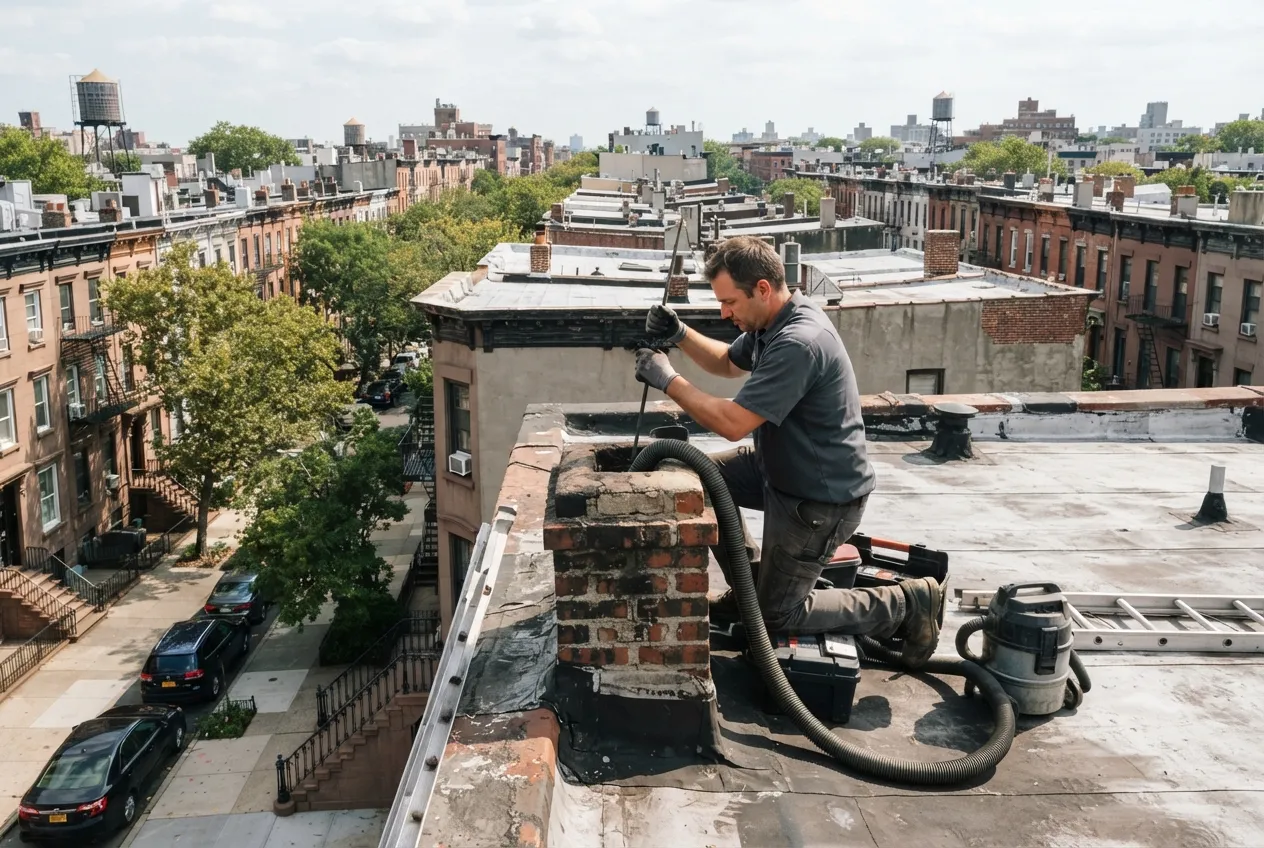
Inside, we treat your home with care. Before any tools come out, we lay drop cloths from the door to the fireplace and cover the hearth and nearby floor. We run a HEPA vacuum during the cleaning to capture fine soot so it doesn't drift into the room. For most flues we use rotary brushes, flexible rods that spin a brush along the inside of the flue to loosen buildup more thoroughly than a straight push-and-pull brush. When we need to see areas that can't be viewed directly, such as joints between flue tiles or sections far up the chimney, we use a camera to record the interior.
On the roof, we check the cap, the crown and the top of the flue, and we clear nesting material or debris that may be blocking the opening. In some homes we sweep from the top down; in others we work from the firebox up. The choice depends on the chimney's design and roof access. We only go on the roof when it's safe to do so. When we leave, we vacuum the work area and remove the drop cloths so your room looks the way we found it.
The standard we follow
We follow the NFPA 211 standard, which calls for chimneys, fireplaces and vents to be inspected once a year. Chimney professionals use three inspection levels. Level 1 applies when nothing about the system has changed. Level 2 applies when the system changes, such as a new appliance or a switch of fuel, or when the home is sold. Level 3 applies when a hidden hazard has to be reached by opening part of the chimney or the building.
This matters for many Brooklyn homes. When a New York City building converts its boiler from oil to gas, the chimney has to be evaluated as part of the work. A new liner is often needed because gas exhaust produces acidic condensate that can corrode a masonry flue. Because the city's heat season runs from October 1 through May 31, scheduling a sweep and inspection before October helps you avoid surprises once the heat is running.
What affects the price
Every chimney is different, so we price each job after learning about your home. The main factors are:
- Chimney height and how easy or difficult it is to reach the roof
- Fuel type, whether wood, gas or oil, since each leaves different deposits
- Flue size, shape and condition, including how many flues need cleaning
- How much soot, creosote or debris has built up
- Whether a camera inspection is needed to see hidden areas
- Whether repairs, such as a new cap, damper work or a liner, turn out to be needed
How a visit works
When you call, we ask a few questions about your chimney, what fuel it serves and anything you've noticed. On the day of the visit, the technician walks through the plan with you, protects the work area and gets started. After the sweep, we go over what we found and show photos or camera footage where available. If repairs are recommended, we explain why and what your choices are. You decide what happens next.
Chimney Sweep by city
- Chimney Sweep in Bay Ridge
- Chimney Sweep in Dyker Heights
- Chimney Sweep in Bath Beach
- Chimney Sweep in Bensonhurst
- Chimney Sweep in Sunset Park
- Chimney Sweep in Borough Park
- Chimney Sweep in Rosebank
- Chimney Sweep in Shore Acres
- Chimney Sweep in Park Hill
- Chimney Sweep in Tompkinsville
- Chimney Sweep in Stapleton
- Chimney Sweep in Clifton