
The short answer
A chimney sweep removes creosote, soot, and debris from your flue so smoke and exhaust can leave your home safely. Tompkinsville homeowners should have the chimney inspected once a year, as the NFPA 211 standard calls for, and swept whenever that inspection shows buildup. Booking before the heating season starts on October 1 is the easiest way to avoid delays.
If you heat with a fireplace, wood stove, or oil or gas boiler in Tompkinsville, your chimney carries smoke and exhaust out of your home every day it runs. Over time, soot, creosote, debris, and sometimes nesting animals build up inside the flue and narrow the path. GoldenFlue Chimney Services sends certified technicians from our Bay Ridge, Brooklyn office, about 3 miles west of Tompkinsville, to sweep chimneys in detached homes, rowhouses, and pre-war apartment buildings across this part of Staten Island.
What a Chimney Sweep Covers in a Tompkinsville Home
A sweep is more than running a brush up the flue. Our technicians protect the area around your fireplace or appliance, clean the firebox, smoke chamber, and flue, and remove the debris they collect. While they work, they look for conditions that affect safety, like cracked flue tiles, a damaged cap, or signs that water is getting in.
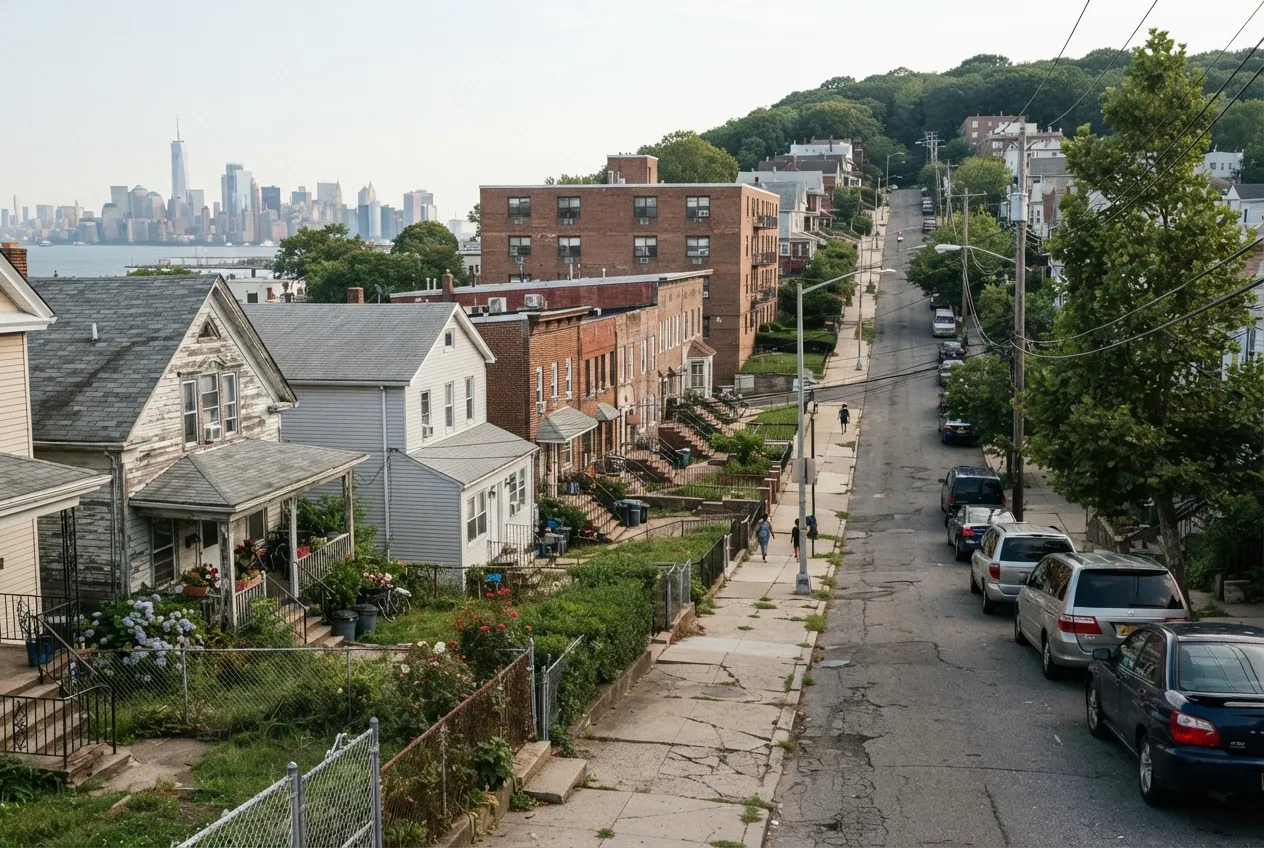
Tompkinsville housing varies a lot from street to street. Older rowhouses and detached homes often have masonry chimneys that have been in service for decades, while multi-unit buildings may have a single flue serving a central boiler. We adjust our tools and approach to the chimney in front of us rather than treating every home the same.
- Cleaning of the firebox, damper, smoke chamber, and flue
- Removal of soot, creosote, and debris from nests or fallen masonry
- Visual check of the cap, crown, and visible flue liner
- A plain-language explanation of what we found and what, if anything, needs attention
Why Sweeping Matters for Fireplaces, Stoves, and Boilers
Wood fires leave creosote, a tar-like residue that can harden on flue walls and catch fire if it builds up enough. Oil-burning boilers leave soot that can restrict draft. Gas appliances burn cleaner, but their flues can still be blocked by debris, animal nests, or loose masonry, and a blocked flue can push exhaust back into the house.
In many older Tompkinsville homes, the chimney serves both a fireplace and a heating appliance, or the original masonry flue now carries exhaust from a newer boiler. That mix makes regular sweeping and inspection especially useful, because problems inside the flue are rarely visible from the living room.
How Often to Schedule a Sweep
The NFPA 211 standard calls for chimneys, fireplaces, and vents to be inspected once a year. Sweeping is based on what that inspection finds: if there is meaningful buildup or debris, the chimney should be cleaned before it is used again. A household that burns wood often may need a sweep every year, while a home that rarely uses its fireplace may need one less often.
When nothing about your system has changed, a basic Level 1 inspection is usually what's needed. If you've added a new appliance, switched fuels, or are buying or selling a home, a more detailed Level 2 inspection is the appropriate step.
Planning Around New York City's Heat Season
New York City's heat season runs from October 1 through May 31, and building owners must keep apartments heated to the city's minimum temperatures during that period. For owners of multi-family buildings in Tompkinsville, that means a boiler chimney problem in winter can turn into an urgent repair. Scheduling a sweep and inspection in late summer or early fall gives you time to handle any issues before the boiler is running full time.
Homeowners with fireplaces benefit from the same timing. A clean, inspected chimney in September is far easier to deal with than a smoky fireplace on the first cold night.
Converting from Oil to Gas
Some Staten Island homes and buildings are moving their boilers from oil to gas. In New York City, the chimney has to be evaluated as part of that conversion. A new liner is often needed, because gas exhaust produces acidic condensate that can corrode a masonry flue. A thorough sweep removes years of oil soot so the flue can be properly evaluated and prepared for whatever the conversion requires.
More services in Tompkinsville
- Chimney Inspection in Tompkinsville
- Chimney Repair in Tompkinsville
- Air Duct Cleaning in Tompkinsville
- Chimney Liner Installation in Tompkinsville