
The short answer
Dryer vent cleaning removes lint and debris from the full length of the duct, from the dryer to the exterior hood, so hot air can leave your home freely. According to the U.S. Fire Administration, failure to clean is the leading factor contributing to home clothes dryer fires. If your dryer takes longer than it used to or the laundry area runs hot, it's time to have the vent cleaned.
Every load of laundry sends lint past the dryer's filter and into the vent that carries hot, damp air out of your home. Over time that lint builds up in the duct, in the bends, and at the exterior hood. In Brooklyn homes the vent path is often longer and more complicated than people expect. It may run through a basement ceiling, behind a finished wall, or up to the roof of a row house. GoldenFlue Chimney Services cleans dryer vents from the back of the machine to the point where the air leaves the building, then checks that air is actually moving the way it should. This page covers the signs that a vent needs attention, what the service includes, how our certified technicians work inside your home and on the roof, what affects the cost, and what to expect on the day of the visit.
Signs you need it
Most dryer vent problems build slowly, so the early signs are easy to write off as an aging dryer. If you notice any of the following, have the vent checked before you assume the machine needs replacing.
- Clothes take two or more cycles to dry, or come out hot but still damp
- The dryer's exterior, the laundry room, or the clothes themselves feel unusually hot
- A burning or scorched smell when the dryer runs
- Lint collecting around the dryer door, behind the machine, or on the floor nearby
- Lint or dust blowing out around the exterior vent hood, or a hood flap that barely opens while the dryer runs
- Chirping, scratching, or fluttering near the vent opening, which can mean birds or rodents are nesting in the hood or duct
- Musty or damp smells in the laundry area, a sign moist air isn't leaving the home
What's included
A dryer vent cleaning covers the whole air path, not just the part you can reach behind the machine. Here is what our crew does on a standard visit.
- Pull the dryer out carefully and disconnect the transition duct
- Clean the lint trap housing and the dryer's exhaust outlet
- Clean the full length of the vent duct with rotary brushes and HEPA vacuum collection
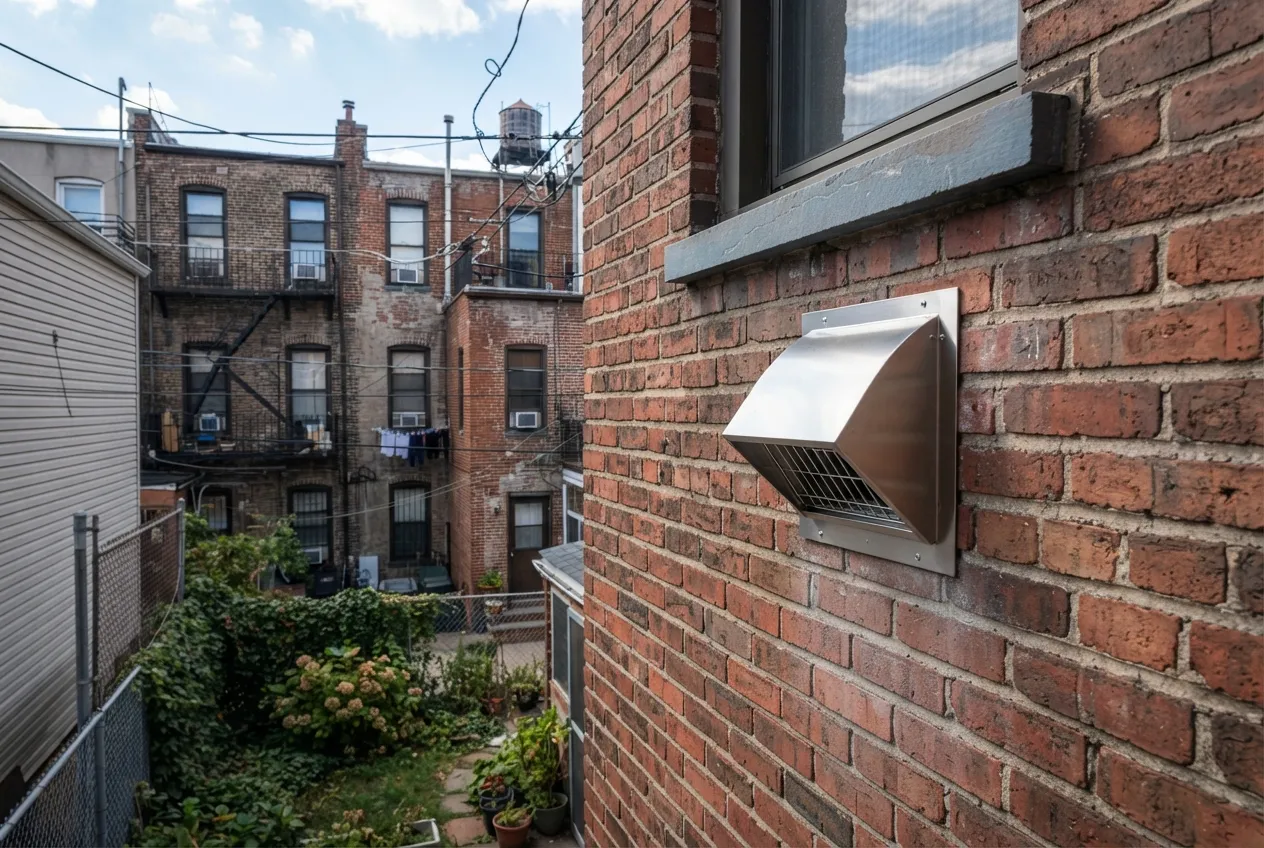
- Clear the exterior hood or roof cap, including lint buildup and any nesting material
- Check the hood flap or damper so it opens freely and closes when the dryer stops
- Inspect the transition duct for crushing, kinks, or tears, and point out flexible plastic or foil duct that should be replaced
- Reconnect the dryer and run it to confirm airflow at the exterior outlet
- Walk you through what we found and anything that needs follow-up
How our crew works in your home and on the roof
Inside, we lay drop cloths along the path from the door to the laundry area and around the dryer before anything gets moved. Lint is light and spreads easily, so we connect a HEPA vacuum to the duct while we work. The rotary brushes loosen buildup from the duct walls, and the vacuum pulls it out instead of pushing it into the room. When the duct runs through a wall or ceiling we can't see into, we use a camera to look at bends, joints, and sections where lint tends to pack in, and we show you the footage.
Many Brooklyn row houses and multi-story homes vent the dryer through the roof instead of a side wall. When that's the case, a technician goes up to clear the roof cap, which often collects lint, leaves, and nesting material. We work from the top and bottom together so debris comes out at a collection point, not into your laundry area. Before we leave, we clean up the work area and haul away the lint and debris we removed.
Why regular cleaning matters
Lint burns easily, and a dryer produces heat every time it runs. According to the U.S. Fire Administration, failure to clean is the leading factor contributing to clothes dryer fires in homes. A clogged vent also makes the dryer run longer and hotter, which wears on the heating element, the thermostat, and the blower.
Cleaning the lint filter after every load helps, but it doesn't reach the duct behind the machine. How often the vent itself needs cleaning depends on how much laundry your household does and how long and twisty the vent run is. Long runs, roof exits, and vents with several bends clog faster than a short, straight run through an outside wall.
What affects the price
Every vent is different, so we quote based on the actual job. These are the main factors.
- Length of the vent run and how many bends or elbows it has
- Where the vent exits: a ground-level wall hood versus a roof cap, and how hard the roof is to reach
- How much lint and debris has built up, including nests or blockages
- Whether the duct is accessible or hidden behind finished walls and ceilings
- Whether a camera inspection is needed to see concealed sections
- Whether repairs are needed, such as replacing a crushed transition duct, a damaged hood, or disconnected sections
How a visit works
When you contact us, we'll ask where your laundry area is, roughly where the vent exits the house, and what you've noticed. That helps us bring the right equipment and set aside enough time. On the day, the technician confirms the vent path with you, sets up drop cloths and the HEPA vacuum, and starts at the dryer.
After cleaning, we run the dryer to check airflow at the exterior outlet and show you any problems we found, with camera footage where we used it. If something needs repair, we explain what it is and why it matters before any added work is done. Please clear a path to the dryer before we arrive and let us know about roof access ahead of time.