The short answer
A chimney cap or chase cover keeps water, animals and debris out of your chimney, and a damaged or missing one is a common cause of leaks, odors and nesting. GoldenFlue's certified technicians inspect the top of the chimney, measure each flue and install a properly sized cap or chase cover, with care taken both on the roof and inside your home.
The top of your chimney takes more weather than almost any other part of your house. A chimney cap keeps rain, snow, leaves, birds and squirrels out of the flue while letting smoke and exhaust escape. A chase cover is the metal panel that seals the top of a framed chimney chase, the boxed-in chimney often found on additions and homes with prefabricated fireplaces. When a cap or chase cover is missing, rusted, cracked or the wrong size, water and animals get in, and the damage usually shows up indoors first. GoldenFlue Chimney Services measures, fits and installs caps and chase covers for homes across Brooklyn and nearby cities, from brownstones with flat roofs to frame houses with steep pitches.
Signs you need a new chimney cap or chase cover
Most homeowners don't look at the top of their chimney until something goes wrong inside. These are the problems that usually point to a missing or failing cap or chase cover:
- Water in the firebox or damp ashes after a rainstorm
- Scratching, chirping or flapping sounds in the chimney, especially in spring
- Leaves, twigs, nesting material, debris or brick flakes falling into the firebox
- White staining on the brick, a sign that water is moving through the masonry
- A musty or smoky odor that gets stronger in humid or rainy weather, when moisture mixes with creosote in the flue
- Poor draft or smoke rolling into the room, which can come from a blocked flue or a nest
- Rust streaks running down the siding of a framed chase, usually from a corroding chase cover
- A cap that is visibly bent, loose, missing its mesh or tilted after a storm
What's included in a cap or chase cover service
Every visit starts with an inspection of the chimney top, so we fix the actual problem instead of just swapping parts. Here is exactly what the service includes:
- Inspection of the existing cap, chase cover, crown and top of the flue
- Exact measurements of each flue opening, or of the full chase top for a chase cover
- Check for nests, debris or blockages at the top of the flue
- Removal of the old, damaged cap or chase cover
- Installation of a properly sized cap with mesh screening to keep animals out
- For chase covers: a cover with a sloped surface and drip edge so water runs off instead of pooling
- Secure fastening and sealing so the new part stays in place through wind and storms
- Photos of the work so you can see the top of your chimney before and after
- A written note of any other issues we find, such as a cracked crown, loose bricks or a liner concern
How our crew works on the roof and in your home
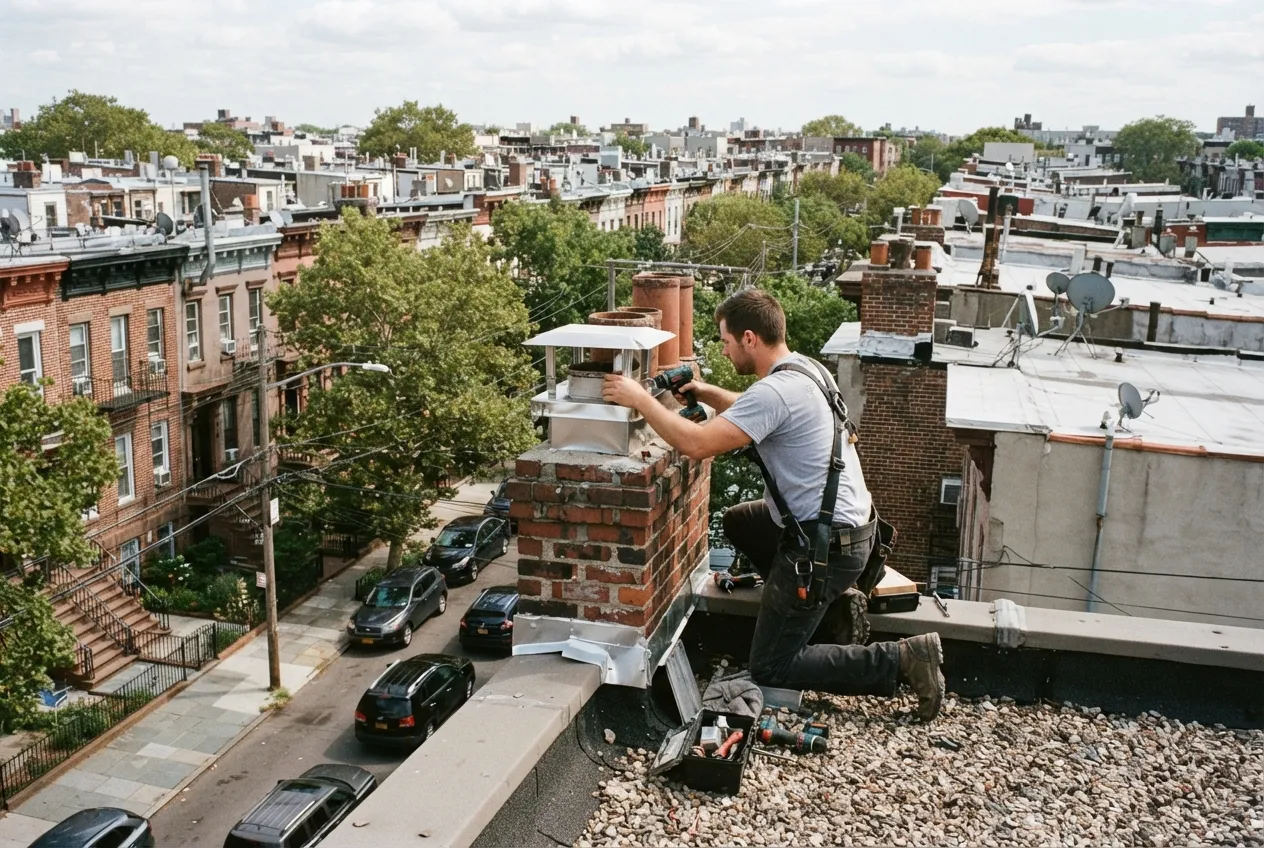
Most of this job happens on the roof. Our technicians set up safe access first, whether that means a ladder to a pitched roof or a hatch to a flat roof, and they protect the roofing surface where they work. Many Brooklyn rowhouses share chimney stacks with several flues, so we confirm which flues belong to your home and which appliance each one serves before we cap anything.
If we find a nest, heavy debris or signs that the flue needs attention, we also work from inside. We lay drop cloths from the door to the fireplace, run HEPA vacuums to control soot and dust, and use rotary brushes when the flue needs cleaning. When we need to see past what a flashlight can reach, we run a camera up the flue to check the liner and look for blockages or damage. We do not remove a nest while animals are still living in it; we tell you what we see and plan the next step with you.
The standard we follow
The NFPA 211 standard calls for chimneys, fireplaces and vents to be inspected once a year. Chimney professionals use three inspection levels: Level 1 when nothing has changed, Level 2 when the system changes, such as a new appliance, a switch of fuel or the sale of the home, and Level 3 when a hidden hazard has to be reached by opening part of the chimney or the building.
Replacing a cap or chase cover is a good time to bring your chimney up to date on that yearly inspection. If your building has converted its boiler from oil to gas, keep in mind that the chimney has to be evaluated as part of that work, and a new liner is often needed because gas exhaust produces acidic condensate that can corrode a masonry flue. A cap protects the top of the flue, but it won't fix a liner that is already damaged.
What affects the price
Every chimney top is different, so we quote after seeing the job. The main factors are:
- Chimney height and roof access, including pitch, flat roofs and hatch access
- Number, size and shape of the flues being capped
- Whether you need a single-flue cap, a cap covering several flues, or a full chase cover
- The fuel type the chimney serves, since gas, oil and wood appliances have different needs
- The condition of the crown, chase and top of the flue
- How much debris or nesting material has to be cleared
- Whether a camera inspection or repair work is needed
How a visit works
You contact us and describe what you're noticing, such as leaks, noises or visible damage. We schedule a visit, and the technician starts with a look at your fireplace or appliance, then goes up to inspect the chimney top. We explain what we found, show you photos and walk you through your options before any work begins.
Once you approve, we measure, install the cap or chase cover and clean up. Since New York City's heat season runs from October 1 through May 31, many owners book this work in late summer or early fall so the chimney is protected and inspected before heating starts.