
The short answer
Chimney repair fixes the masonry, crown, flashing, cap, and flue liner damage that lets water in or keeps exhaust from venting safely. GoldenFlue inspects first to find the cause, explains what needs fixing and why, and then does the work with your home protected inside and out.
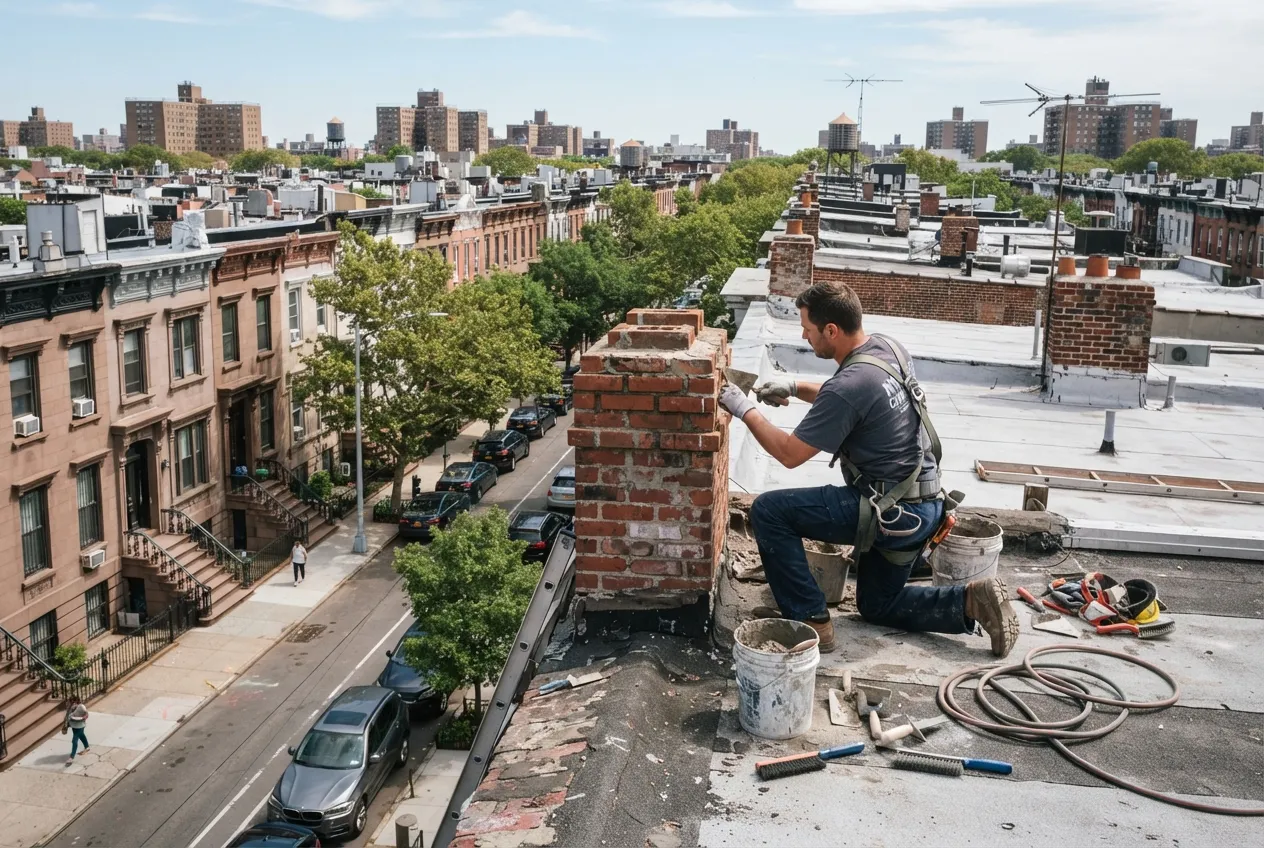
Brick chimneys in Brooklyn take steady punishment. Freeze-thaw cycles, wind-driven rain, and many heating seasons slowly open mortar joints, crack crowns, loosen flashing, and wear down flue liners. Most of this damage stays out of sight until water shows up in the firebox or brick starts flaking onto the hearth. GoldenFlue Chimney Services repairs masonry chimneys, crowns, caps, flashing, and flue liners for homeowners in Brooklyn and the surrounding area. Our certified technicians first work out why the damage happened. Then they fix the cause along with the visible damage, so the same problem is less likely to come back a few seasons later. Whether you burn wood in an open fireplace or your chimney only vents a gas boiler or water heater, the goal is the same: a chimney that keeps water out and sends exhaust safely outside.
Signs you need chimney repair
Chimney damage usually starts small and gets worse each winter as water soaks into the brick and expands when it freezes. Catching it early often means a smaller repair. If you notice any of the signs below, schedule an inspection before your next heating season instead of waiting for the problem to spread into walls or ceilings.
Some of these signs point to a leak. Others point to a damaged liner or a blocked flue, which affects how safely exhaust leaves your home. Either way, a technician needs to look at the chimney to tell what is going on.
- Water, rust, or wet ashes in the firebox after rain
- Brick chips, mortar crumbs, or flakes of flue tile falling onto the hearth or damper
- White, chalky staining on the brick inside or outside the house
- Cracked, crumbling, or missing mortar between bricks
- A cracked or broken crown, or a cap that is rusted, bent, or missing
- Water stains on the ceiling or wall next to the chimney
- Poor draft, or smoke rolling back into the room when you light a fire
- A strong smoky or musty smell from the fireplace, especially in humid weather
What our chimney repair includes
Every repair starts with an inspection, because the spot where you see damage is not always where the problem begins. A water stain inside the house might come from failed flashing, a cracked crown, or porous brick several feet away. Once we know the cause, we explain what we found and what we recommend before any repair work begins. Depending on what the inspection shows, the work can include any of the following.
- A visual inspection of the firebox, damper, smoke chamber, flue, and exterior masonry
- A camera inspection of the flue liner when cracks, gaps, or hidden damage are suspected
- Repointing: removing failed mortar and replacing it with new mortar suited to the existing brick
- Replacing spalled or cracked bricks
- Repairing or rebuilding a cracked chimney crown
- Resealing or replacing flashing where the chimney meets the roof
- Installing or replacing a chimney cap to keep out rain, debris, and animals
- Repairing or replacing a damaged flue liner, including stainless steel liners for appliance flues
- Firebox and damper repairs, including replacing cracked firebrick
- Applying a breathable water repellent to the masonry where it fits
- Photos of what we found and a clear explanation of the work done
How we work inside your home and on the roof
Inside, we treat your home like it is our own. Before opening the fireplace or cleanout, the crew lays drop cloths from the door to the work area and covers the hearth and nearby furniture. When the flue needs cleaning before a repair or a camera inspection, we run HEPA vacuums to capture soot and dust at the source while rotary brushes clear buildup from the liner. That keeps fine particles out of your living space.
A chimney camera lets us see the full length of the flue without opening walls. It shows cracked tiles, open mortar joints, gaps between liner sections, and leftover blockages that a flashlight cannot reach. When it is useful, we show you the footage so you can see the problem for yourself.
On the roof, the crew uses ladders and safety equipment suited to your roof type and height. We take care to avoid damaging shingles, flat roofing, or gutters while we work. Masonry debris is bagged and removed rather than left on the roof or swept into your gutters. Before we leave, we clean up inside and out and walk you through what was done.
The standard we follow
Our work follows NFPA 211, the national standard for chimneys, fireplaces, and vents. NFPA 211 calls for chimneys, fireplaces, and vents to be inspected once a year, even if you use them only occasionally.
Chimney professionals use three inspection levels. A Level 1 inspection fits when nothing about your system has changed. A Level 2 inspection is called for when the system changes, such as a new appliance or a switch of fuel, or when the home is being sold. A Level 3 inspection applies when a hidden hazard has to be reached by opening part of the chimney or the building. We recommend the level that matches your situation and explain why.
Switching fuels deserves special attention in New York City. When a building converts its boiler from oil to gas, the chimney has to be evaluated as part of the work. A new liner is often needed, because gas exhaust produces acidic condensate that can corrode a masonry flue over time. If you are planning a conversion, bring us in early so the chimney work does not hold up the project.
What affects the price of chimney repair
Every chimney is different, so we quote each repair after we have seen it. These are the main factors that shape the cost of the job:
- Chimney height and how hard it is to reach the roof safely
- The fuel the chimney serves: wood, gas, or oil
- The size, shape, and condition of the flue
- How much creosote, soot, or debris must be cleared before the repair
- Whether a camera inspection is needed to find hidden damage
- The type and extent of repair, from repointing a few joints to rebuilding a crown or relining the flue
How a visit works
When you contact us, we ask what you have noticed, what fuel the chimney serves, and roughly how old the house is. That helps us send the right crew and equipment. We schedule a time that works for you and arrive ready to protect your home before we start.
The technician inspects the chimney inside and out, using a camera where it is needed. You get a clear explanation of what we found, photos of the problem areas, and our recommendation. Minor repairs can often be finished during the same visit. Larger work, such as rebuilding a crown or installing a new liner, is scheduled as a separate visit once you approve it.
Timing matters. New York City's heat season runs from October 1 through May 31, and your heating system relies on a sound chimney through those months. Late spring and summer are good times to handle repairs, so the chimney is ready before the cold weather returns.
Chimney Repair by city
- Chimney Repair in Bay Ridge
- Chimney Repair in Dyker Heights
- Chimney Repair in Bath Beach
- Chimney Repair in Bensonhurst
- Chimney Repair in Sunset Park
- Chimney Repair in Borough Park
- Chimney Repair in Rosebank
- Chimney Repair in Shore Acres
- Chimney Repair in Park Hill
- Chimney Repair in Tompkinsville
- Chimney Repair in Stapleton
- Chimney Repair in Clifton