
The short answer
GoldenFlue repairs chimneys in Park Hill, Staten Island, including crowns, mortar joints, flashing, caps, and flue liners. We inspect first to find the cause, then fix it. We also help buildings plan liner work for oil-to-gas conversions and schedule repairs around the city's October-to-May heat season.
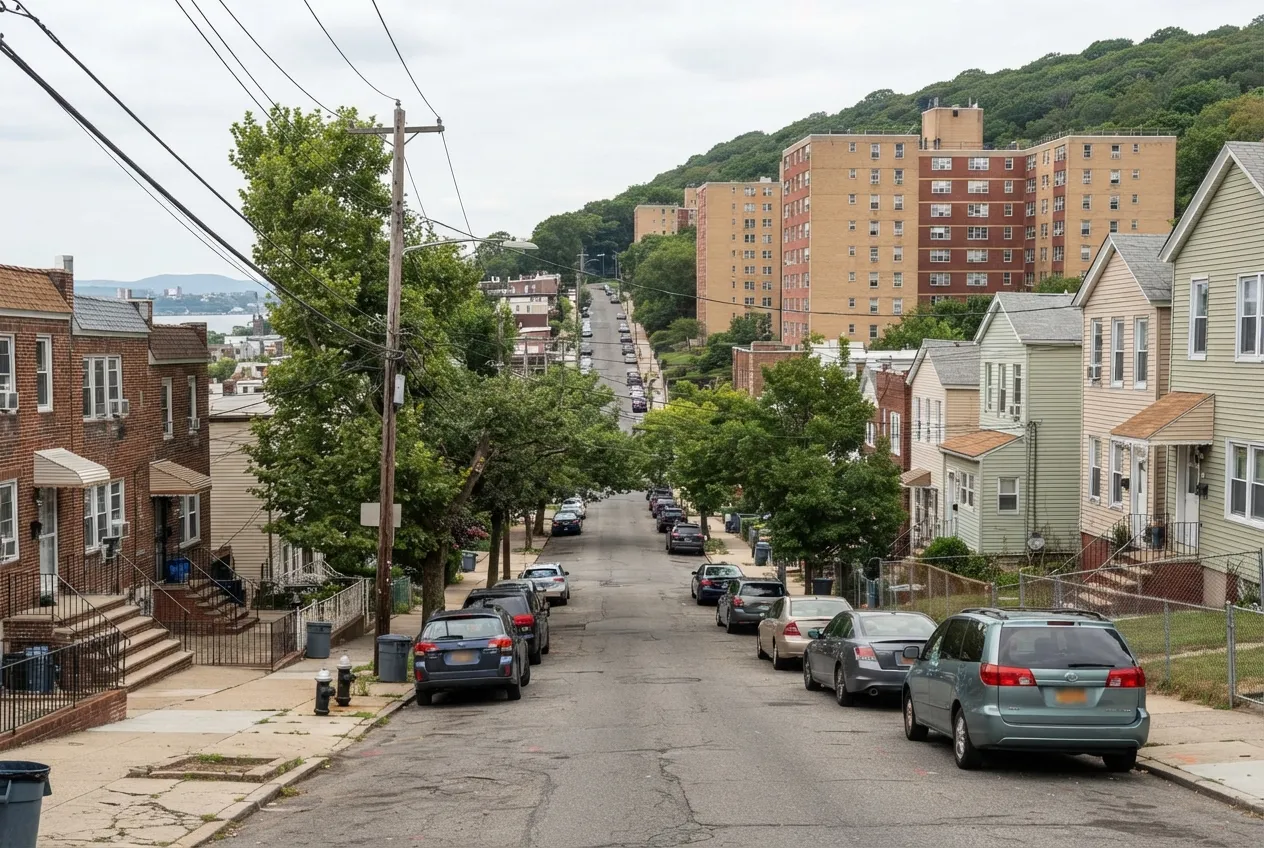
If your chimney is leaking, shedding brick, or failed an inspection, GoldenFlue Chimney Services repairs chimneys in Park Hill and across Staten Island's North Shore. The neighborhood includes pre-war apartment buildings, attached rowhouses, and detached homes, so we work on everything from small fireplace chimneys to tall masonry stacks venting boilers. Our certified technicians first find out why the damage happened. Then we fix the cause, not just the symptom, so the same crack or leak doesn't come back next winter.
Common Chimney Problems in Park Hill Homes
Most chimney damage comes from water. Rain and snow soak into brick and mortar, then expand when they freeze, which slowly breaks the masonry apart. Exhaust from fireplaces and heating appliances also wears the chimney down from the inside. These are the problems we repair most often:
- Cracked or crumbling crowns. The crown is the concrete cap at the top of the chimney that sheds water away from the flue.
- Missing or eroded mortar joints that need repointing
- Spalling brick, where the face of the brick flakes or pops off
- Leaking flashing where the chimney meets the roof, which often shows up as stains on ceilings or walls
- Rusted, loose, or missing chimney caps that let in rain, debris, and animals
- Cracked clay tile liners or corroded metal liners
- Damaged fireboxes and dampers that no longer seal
Warning Signs to Watch For
You don't have to climb on the roof to spot trouble. Look for water stains near the chimney, bits of brick or mortar on the roof or in the yard, a white chalky residue on the brick, or a musty smell from the fireplace. Small flakes of tile in the firebox can point to a damaged liner.
Small problems like a hairline crack in the crown or a few open mortar joints are usually simple to fix. If they're left alone, they can lead to rebuilding part of the chimney above the roofline.
Inspection Comes Before Repair
The NFPA 211 standard calls for chimneys, fireplaces, and vents to be inspected once a year. An inspection is also how we decide what a repair should include. Chimney professionals use three inspection levels:
- Level 1: a check of the accessible parts of the chimney when nothing about the system has changed
- Level 2: a more detailed inspection, often with a video scan of the flue, when you add a new appliance, switch fuels, or sell the home
- Level 3: used when a suspected hazard is hidden and part of the chimney or building has to be opened to reach it
Boiler Conversions and Chimney Liners
Many Park Hill buildings heat with boilers, and some are converting from oil to gas. When a New York City building makes that switch, the chimney has to be evaluated as part of the work. A new liner is often needed because gas exhaust produces acidic condensate, which can corrode a masonry flue that was built for oil.
We check the existing flue, confirm whether it can safely vent the new equipment, and install a properly sized liner if one is needed. If you're planning a conversion, bring us in early so the chimney work doesn't hold up the rest of the project.
Planning Repairs Around Heat Season
New York City's heat season runs from October 1 through May 31. During those months, building owners must keep apartments heated to the city's minimum temperatures, so it's harder to shut down a boiler chimney for long. For apartment buildings and multi-family homes, late spring and summer are usually the easiest times for liner installations and major masonry work.
Masonry repairs also cure best in moderate weather. Still, a leak or a damaged flue shouldn't wait for a better season. If something is unsafe in the middle of winter, we'll talk through short-term fixes and the safest way to keep your heat running.
Serving Park Hill and the North Shore
Park Hill is about 2 miles west of our office in Bay Ridge, Brooklyn. We also repair chimneys in nearby Rosebank, Shore Acres, Tompkinsville, Stapleton, and Clifton. You might own a detached home with a fireplace chimney or manage a pre-war apartment building with a boiler flue. Either way, we'll explain the problem clearly and give you a written scope of work before any repair begins.
More services in Park Hill
- Chimney Sweep in Park Hill
- Chimney Inspection in Park Hill
- Air Duct Cleaning in Park Hill
- Chimney Liner Installation in Park Hill