
The short answer
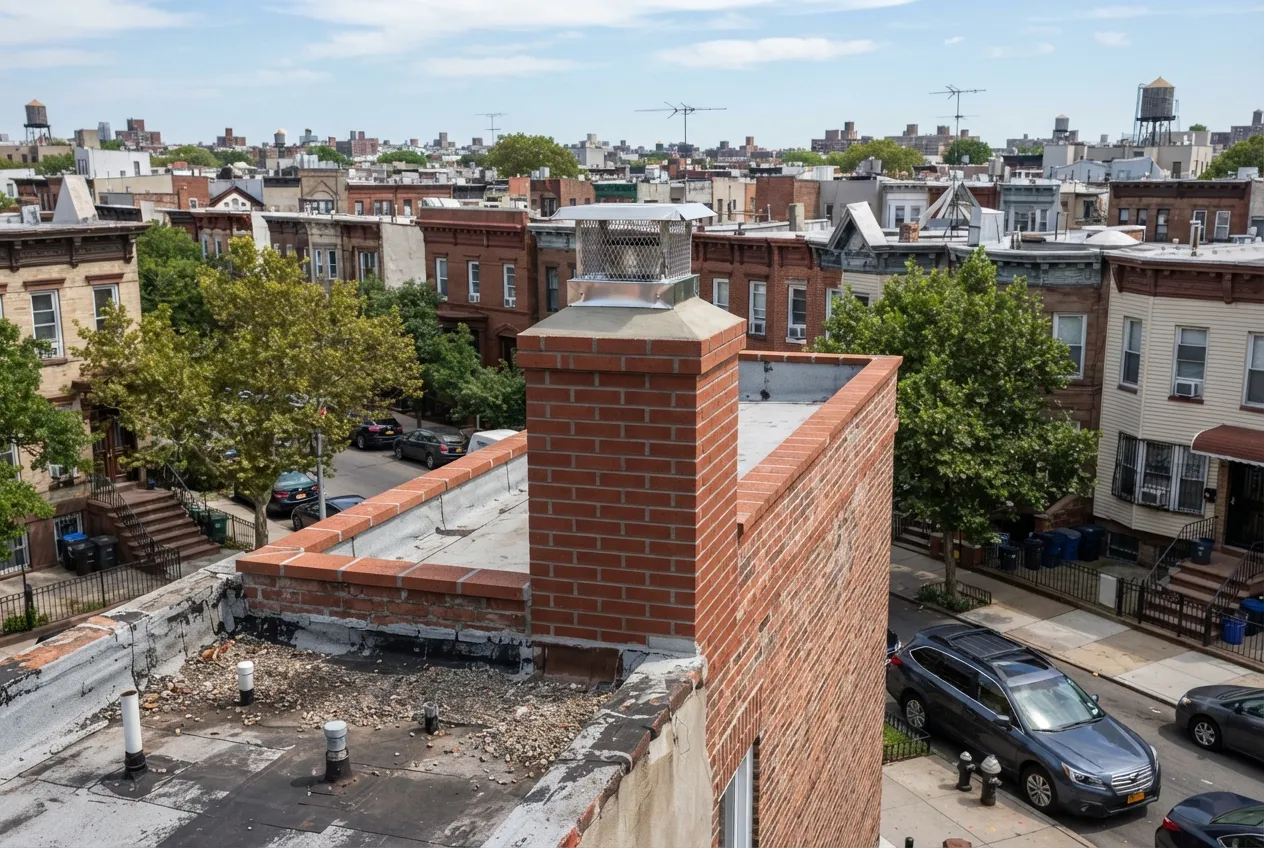
You need a chimney rebuild when bricks are spalling, mortar is washing out, the stack leans, or water keeps getting through, and patching no longer holds. GoldenFlue inspects the chimney, tears down the damaged masonry to sound brick, and rebuilds it with a new crown, flashing and cap. Price depends on height, roof access, how much comes down and the flue's condition.
When a chimney's brick and mortar have deteriorated past what repointing or patching can hold together, the lasting fix is to take the damaged section down and lay it back up on sound masonry. GoldenFlue Chimney Services rebuilds chimneys for homeowners in Brooklyn and nearby cities, from the crown down to solid brick. This page covers the signs that point to a rebuild, what the job includes, how our certified technicians work inside your home and on your roof, the standard we follow, what affects the cost, and how a visit works from first call to final cleanup.
Signs you need it
Most chimney damage starts with water. Rain and snowmelt soak into old brick and mortar, freeze, expand, and slowly push the masonry apart. By the time you see the damage from the street, it has usually been building for a while. These are the warning signs homeowners notice most often:
Not every one of these signs means the whole chimney has to come down. Often only the section above the roofline needs rebuilding, and sometimes repointing is enough. An inspection tells you which repair fits.
- Brick flakes, sandy mortar or small chunks of masonry in the firebox or on the smoke shelf
- White, chalky staining on the outside brick or on chimney walls in the attic, which shows water is moving through the masonry
- Water in the firebox or around the damper after rain
- Bricks with their faces popping off, and mortar joints that are recessed, crumbling or missing
- A chimney that leans, bulges, or has pulled away from the house
- A cracked or broken crown on top of the chimney
- Poor draft or a smoke smell indoors, which can happen when loose masonry partly blocks the flue
What's included in a chimney rebuild
Every rebuild starts with a written scope, so you know which courses of brick are coming down and what is going back up. A typical job includes:
- Inspection of the chimney inside and out, including a camera scan of the flue
- Protection of the roof, gutters, landscaping and the room with the fireplace
- Teardown of damaged brick and mortar down to sound masonry
- Rebuilding with new brick chosen to match the existing chimney as closely as practical
- New flue tiles or a liner where the existing flue is damaged or not suited to the appliance
- A new crown sloped to shed water away from the brick, with an overhang
- New flashing where the chimney meets the roof
- A chimney cap to keep out rain, debris and animals
- Cleaning of the flue and firebox after masonry work
- Removal of all debris and a final walkthrough with photos of the finished work
How our crew works in your home and on your roof
Rebuilding is mostly roof work, but it still produces dust and loose mortar that can fall down the flue. Before work begins, the crew lays drop cloths from your entry to the fireplace and seals the fireplace opening with plastic. HEPA vacuums capture fine dust at the firebox, and rotary brushes clear mortar and debris from the flue once the masonry work is done. A camera scan of the flue before and after shows you what was found and what was fixed.
On the roof, the crew sets up safe access with ladders, roof brackets or scaffolding, depending on height and pitch. Shingles and gutters around the chimney are protected, and old brick is lowered in bags or through a chute instead of being thrown down. If a job runs more than one day, the open chimney is covered at the end of each day to keep rain out of the flue and the house.
The standard we follow
We work to NFPA 211, the national standard for chimneys, fireplaces and vents. It calls for chimneys to be inspected once a year. Chimney professionals use three inspection levels: Level 1 when nothing has changed, Level 2 when the system changes (such as a new appliance or a switch of fuel) or the home is sold, and Level 3 when a hidden hazard has to be reached by opening part of the chimney or the building.
A rebuild usually calls for at least a Level 2 inspection, including a camera look at the flue. If the inspection points to damage behind a wall or ceiling, a Level 3 inspection may be needed to see it. If your home is converting its boiler from oil to gas, keep in mind that New York City requires the chimney to be evaluated as part of that work. A new liner is often needed, because gas exhaust produces acidic condensate that can corrode a masonry flue. A rebuild is a good time to deal with both.
What affects the price
We give you a written quote after the inspection, not before, because every chimney is different. The main factors are:
- Chimney height, roof pitch and how the crew can reach it, including whether scaffolding is needed
- How much masonry has to come down, from a few courses above the roofline to a full rebuild
- The number of flues and their size
- The flue's condition, and whether new tiles or a liner are needed
- The fuel the chimney serves, such as wood, oil or gas, which affects liner choices
- The type of brick and how hard it is to match
- Whether a camera inspection, a Level 3 inspection, or extra repairs like flashing or roof patching are needed
How a visit works
First, you contact us and describe what you're seeing. Photos of the chimney or of debris in the firebox help. We schedule an inspection, and a certified technician examines the chimney from the roof and from inside, with a camera scan of the flue.
Next, you get a written scope and quote that explains what needs rebuilding and why. Once you approve it, we schedule the work around the weather, since masonry needs dry conditions to set properly. If the chimney vents a boiler, planning the work outside New York City's heat season, which runs from October 1 through May 31, makes it easier to keep the house warm.
On work days, the crew protects your home, completes the teardown and rebuild, cleans the flue and firebox, and hauls away debris. We finish with a walkthrough and photos so you can see the new crown, flashing and cap without climbing onto the roof.