
The short answer
GoldenFlue repairs chimneys on Sunset Park rowhouses, brownstones and pre-war apartment buildings, including repointing, crowns, flashing, caps, partial rebuilds and flue liners. Every repair starts with an inspection, so you know what is wrong and what we recommend before any work begins.
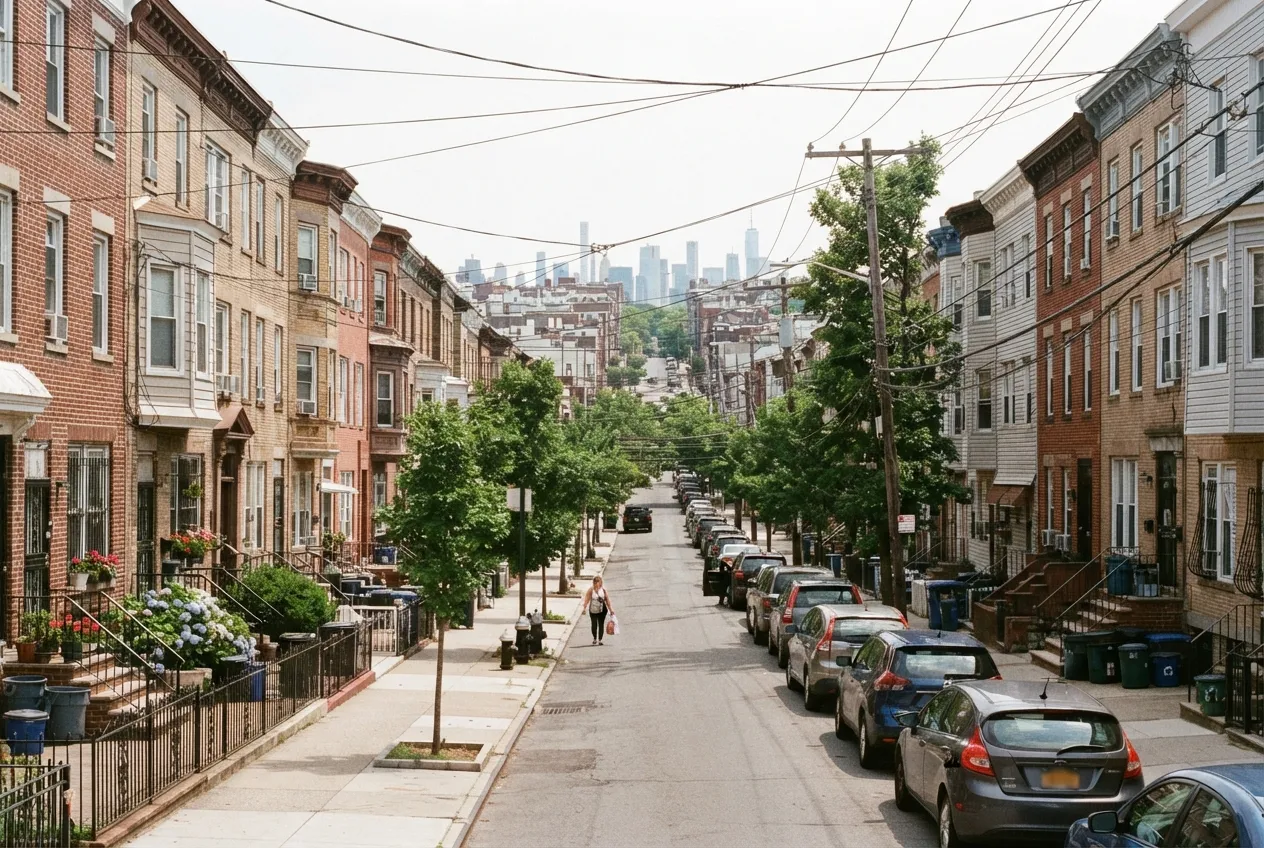
Most Sunset Park homes are older masonry: brick and brownstone rowhouses, two- and three-family houses, and pre-war apartment buildings. Many of these chimneys have served more than one kind of heating equipment over the years, and Brooklyn weather wears down brick, mortar and flue liners. GoldenFlue Chimney Services repairs chimneys across Sunset Park from our office in Bay Ridge, about 2 miles away. Our certified technicians find the cause of the problem, explain it in plain terms, and fix it so your chimney stays dry and vents safely.
Chimney problems we see on Sunset Park rowhouses and pre-war buildings
Most chimneys in the neighborhood are brick. Some are shared along a row of attached houses, and some run up through several floors of an apartment building. Masonry this age rarely fails all at once. Water gets in at the top, freezes and thaws through the winter, and slowly loosens the mortar. By the time you notice a stain on a ceiling or pieces of brick on the roof, the damage has usually been building for a while.
The repairs we handle most often include:
- Repointing: grinding out cracked or missing mortar joints and packing in fresh mortar so the stack sheds water again.
- Crown repair or rebuilding: fixing the cap of concrete or mortar on top of the chimney, which can crack and let water straight into the masonry.
- Flashing repair: resealing or replacing the metal where the chimney meets the roof, a common source of leaks on flat-roofed rowhouses.
- Chimney caps and screens: keeping rain, birds and debris out of an open flue.
- Partial rebuilds: taking down and relaying loose or leaning brick above the roofline.
- Flue liner repair and relining: fixing cracked clay tiles, or replacing a liner that no longer suits the appliance venting into it.
- Firebox and damper repair: restoring damaged firebrick, mortar joints and dampers on working fireplaces.
How we figure out what needs fixing
A good repair starts with knowing exactly what is wrong. The NFPA 211 standard calls for chimneys, fireplaces and vents to be inspected once a year, and chimney professionals use three inspection levels. A Level 1 inspection fits when nothing about the system has changed. A Level 2 inspection is called for when the system changes, such as a new appliance or a switch of fuel, or when the home is sold. A Level 3 inspection is reserved for cases where a hidden hazard can only be reached by opening part of the chimney or the building.
Our technicians check the chimney from the roof and from inside the house. When it helps, we also run a camera through the flue to see the liner from the inside. Before any work begins, we explain what we found and describe the repair we recommend. If something can safely wait, we'll tell you so.
Oil-to-gas conversions and flue liners
If your house or building is switching from oil heat to gas, plan for the chimney as well as the boiler. When a New York City building converts its boiler from oil to gas, the chimney has to be evaluated as part of the work. A new liner is often needed, because gas exhaust produces acidic condensate that can corrode a masonry flue from the inside.
We can evaluate your existing flue and tell you whether it suits the new equipment. When a liner is required, we install one sized for the appliance. If your heating contractor has already flagged the chimney, we can coordinate with them so the boiler work and the flue work fit together.
Timing repairs around heat season
New York City's heat season runs from October 1 through May 31. During those months, building owners must keep apartments heated to the city's minimum temperatures. If you own a two- or three-family house or a small apartment building, a failed flue in January is a serious problem. Scheduling repairs in late spring or summer leaves time to finish masonry, liner and cap work before the boiler has to run full time.
Some problems shouldn't wait for a convenient season. Contact us promptly if you notice any of these: an exhaust smell indoors, water coming in around the chimney, bricks falling from the stack, or a heating contractor reporting that the flue isn't drafting properly. If a carbon monoxide alarm sounds, get everyone outside and call 911 first.
Serving Sunset Park and nearby neighborhoods
We work throughout Sunset Park in ZIP codes 11220 and 11232, about 2 miles from our office in Bay Ridge. We also repair chimneys in Borough Park, Dyker Heights, Bay Ridge, Bensonhurst and Bath Beach, where the homes and their chimney problems are much the same. Whether you own a single rowhouse or manage a pre-war building, we'll schedule a visit, inspect the chimney and give you a clear repair plan.
More services in Sunset Park
- Chimney Sweep in Sunset Park
- Chimney Inspection in Sunset Park
- Air Duct Cleaning in Sunset Park
- Chimney Liner Installation in Sunset Park