
The short answer
Chimney repair in Dyker Heights usually means fixing worn mortar joints, cracked crowns, leaking flashing, missing caps, or damaged flue liners. GoldenFlue Chimney Services inspects the chimney, shows you what needs attention, and repairs it so your fireplace or heating system can vent safely.
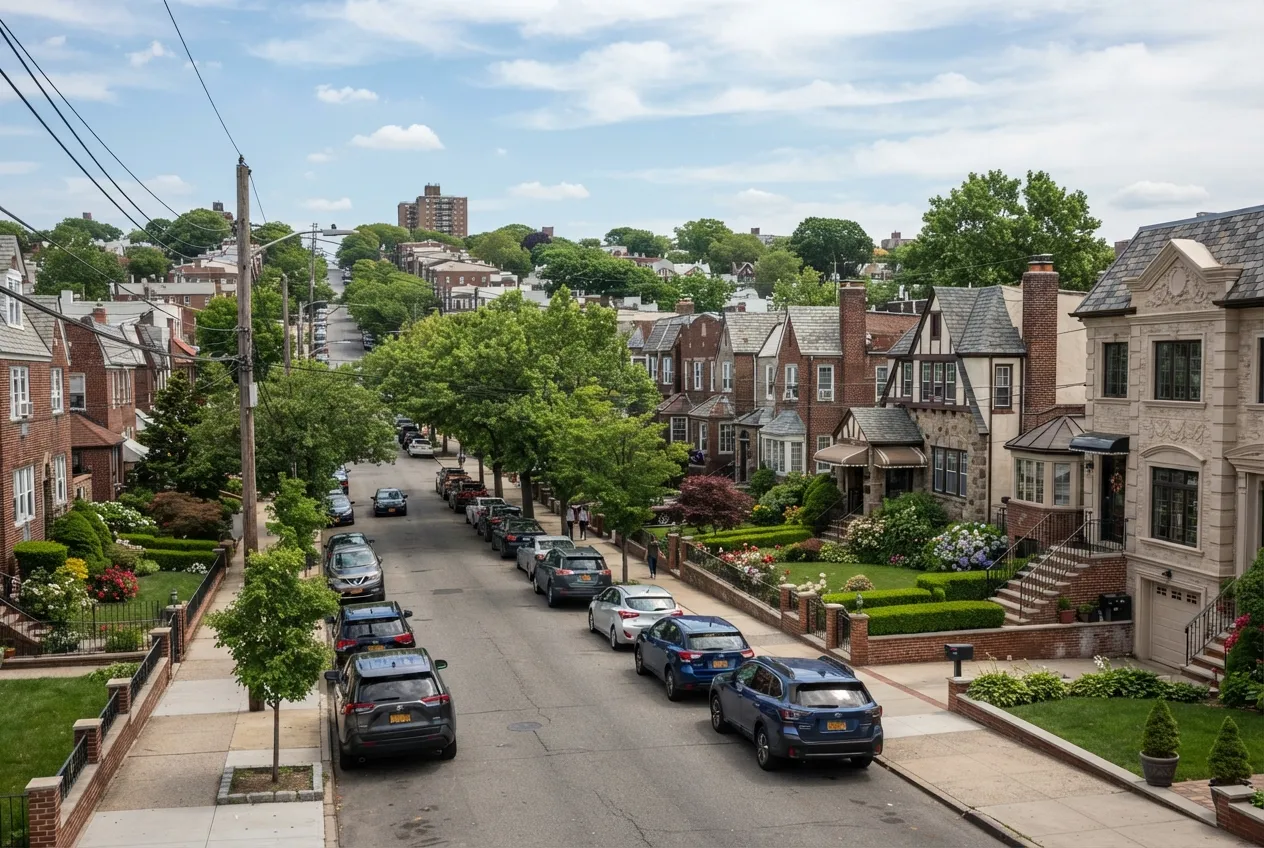
Dyker Heights is mostly detached and semi-detached houses, two-family homes, and attached rowhouses. Many still rely on masonry chimneys built decades ago, and those chimneys take steady punishment from freeze-thaw cycles, salt air off the water, and long heating seasons. GoldenFlue Chimney Services repairs chimneys across ZIP code 11228 from our office in Bay Ridge, about a mile east. Our certified technicians inspect first, explain what they find in plain terms, and fix the problem that is actually there.
Common Chimney Problems in Dyker Heights Homes
Most chimney damage here starts at the top and works down. The crown, the cement cap that covers the top of the masonry, cracks over time. Water gets into the brick, freezes in winter, and pushes the joints apart. On many older homes the original mortar has simply worn out, and you may see sandy gaps between bricks or loose bricks near the top of the stack.
Leaks where the chimney meets the roof are another frequent call. Flashing can pull away, rust through, or get patched over with roofing tar that cracks within a season or two. Inside the home, this often shows up as water stains on a ceiling or wall near the chimney, which homeowners sometimes mistake for a roof problem.
- Cracked or crumbling chimney crowns
- Missing or eroded mortar joints and spalling brick
- Leaking or failed flashing at the roofline
- Missing, rusted, or damaged chimney caps
- Cracked, deteriorated, or missing flue liners
- Damaged dampers and firebox masonry
Oil-to-Gas Conversions and Flue Liners
Many houses in this part of Brooklyn have moved, or are thinking about moving, from an oil boiler to gas. In New York City, the chimney has to be evaluated as part of that conversion. A new liner is often required because gas exhaust produces acidic condensate that can corrode an unlined or poorly lined masonry flue from the inside.
If your boiler or water heater has been converted and the chimney was never checked, or if you see crumbling material collecting at the base of the flue, it is worth having the liner looked at. We can assess the existing flue and install a properly sized liner that fits your appliance and your chimney.
How We Approach a Chimney Repair
Every repair begins with an inspection. The NFPA 211 standard calls for chimneys, fireplaces, and vents to be inspected once a year, and it describes three levels. A Level 1 inspection fits when nothing about the system has changed. A Level 2 inspection is called for when something changes, such as a new appliance or a switch of fuel, or when a home is sold. A Level 3 inspection is used when a suspected hazard is hidden and part of the chimney or building has to be opened to reach it.
After the inspection, we walk you through what we found, including photos where they help, and explain which repairs are urgent and which can wait. We would rather fix a crown or reseal flashing now than have you rebuild a chimney later, and we tell you plainly when a smaller repair will do the job.
Timing Repairs Around the Heating Season
New York City's heat season runs from October 1 through May 31. If you rent out part of a two-family home or own a small building, your heating system needs to vent properly the whole time, and a chimney problem found in January is harder to handle than one fixed in early fall.
Late spring and summer are usually the easiest times to schedule masonry work, crown repairs, and liner installations. Mortar and crown materials cure better in milder weather, and you avoid shutting down heat when you need it. If something has already gone wrong mid-winter, such as a blocked flue, a carbon monoxide alarm, or water pouring in around the chimney, call us and we will help you figure out the safest next step.
Serving Dyker Heights and Nearby Neighborhoods
Because our office is in Bay Ridge, Dyker Heights is close to home for us. We also repair chimneys in Bensonhurst, Borough Park, Bath Beach, and Sunset Park, where the housing mix of rowhouses, detached homes, and pre-war buildings brings many of the same chimney problems.
More services in Dyker Heights
- Chimney Sweep in Dyker Heights
- Chimney Inspection in Dyker Heights
- Air Duct Cleaning in Dyker Heights
- Chimney Liner Installation in Dyker Heights