
The short answer
Air duct cleaning is worth doing when your ducts have substantial visible mold, signs of rodents or insects, or heavy dust and debris that blows out of the vents. GoldenFlue inspects ducts in Dyker Heights homes first, shows you what we find, and cleans the full system only when the condition calls for it.
Many Dyker Heights homes have forced-air heating, central air, or both. That includes detached and semi-detached houses, two-family homes, and rowhouses whose systems were added or replaced over the years. Over time, the ductwork that carries that air can collect dust, construction debris, pet hair, and sometimes worse. GoldenFlue Chimney Services is based in Bay Ridge, about a mile west of Dyker Heights, and our certified technicians clean air ducts throughout the 11228 ZIP code. We start by looking inside your ducts. Then we tell you plainly whether cleaning makes sense for your home.
When Duct Cleaning Makes Sense, and When It Doesn't
The U.S. Environmental Protection Agency advises cleaning air ducts in three situations. The first is when there is substantial visible mold growth. The second is when ducts are infested with vermin. The third is when ducts are clogged with excessive dust and debris, enough that particles are released into the home through the supply registers.
The EPA also notes that duct cleaning has not been shown to prevent health problems. We think that is worth saying up front. If your ducts look reasonably clean, we will tell you so rather than recommend work you don't need. When ducts do need attention, a thorough cleaning removes material that otherwise keeps circulating every time the system runs.
- Mold you can see on duct surfaces, on the blower, or around the coil
- Droppings, nesting material, or insects inside the ductwork
- Dust puffing out of registers when the system starts up
- Leftover drywall dust or debris after a renovation
- Moving into a home where you don't know when the ducts were last serviced
Duct Systems in Dyker Heights Homes
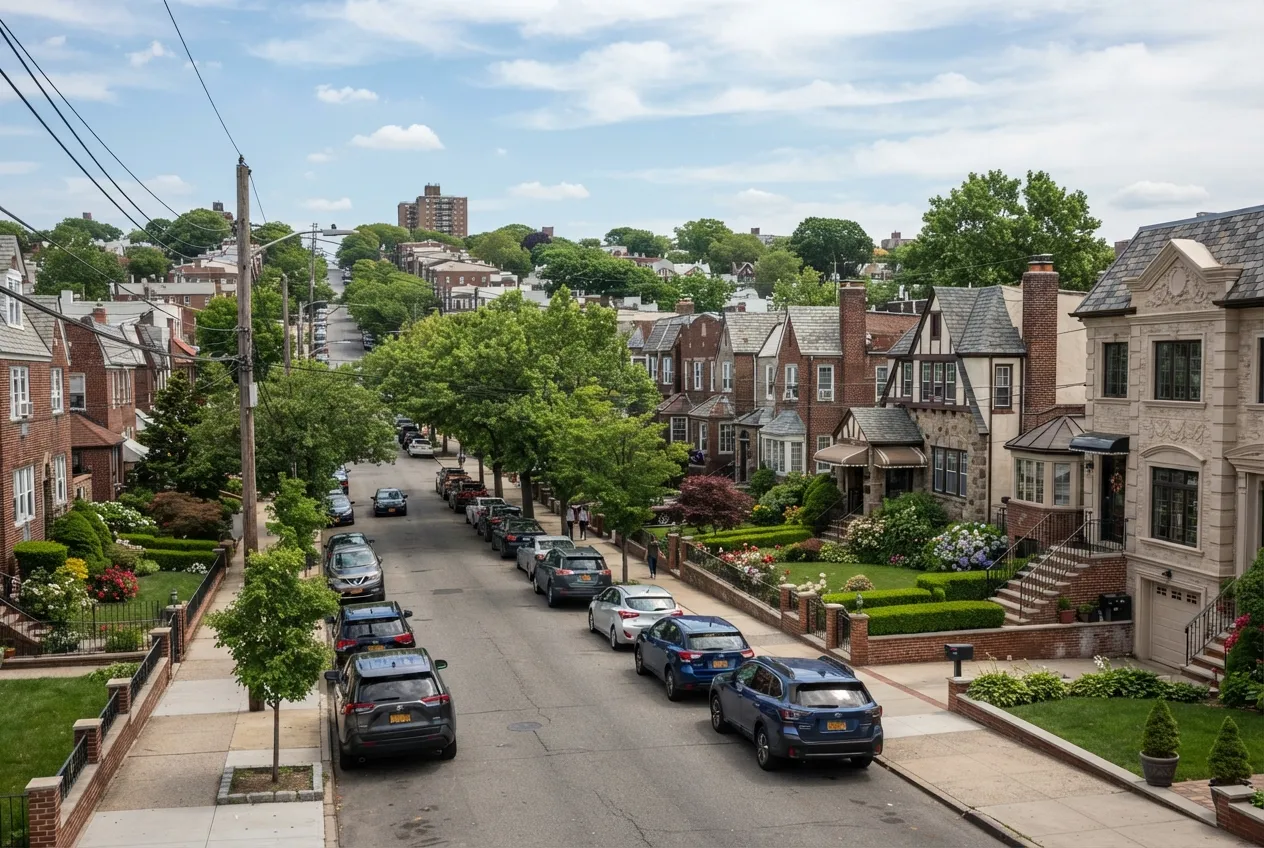
Housing in Dyker Heights runs from detached single-family homes to semi-detached and attached two-family houses. Many of these homes were built before central air was common. Their duct systems were often added later, routed through basements, closets, soffits, and attic spaces wherever they would fit. That can mean long runs, tight bends, and sections that are hard to reach. These are places where dust and debris tend to settle.
In two-family homes, each unit may have its own system or the units may share equipment. Before we begin, we map out which registers and returns belong to which system so nothing gets missed. Basement air handlers deserve a close look as well. Basements can be damp, and moisture near the blower and coil is where mold problems often start.
How We Clean Your Ducts
Every job starts with an inspection. We remove register covers, look into supply and return runs, and check the blower compartment and accessible parts of the air handler. If we find little buildup, we'll say so. If cleaning is warranted, we walk you through what we saw before any work begins.
For the cleaning itself, we put the system under negative pressure with a high-powered vacuum connected to the ductwork. Then we use brushes and air tools to loosen material from the inside of each run so the vacuum pulls it out of the house. We clean the registers, grilles, and return openings. We protect floors and furnishings near the work area.
- Inspection of supply runs, returns, and the blower area
- Mechanical agitation to break debris loose from duct walls
- Vacuum collection under negative pressure
- Cleaning of registers, grilles, and return covers
- A walkthrough of the results when we finish
A Careful Approach to Chemical Treatments
Some companies push sanitizers, sealants, or fragrance treatments sprayed into ductwork. The EPA urges caution with chemical treatments, and we agree. Removing the debris is the main job. If we find mold, we will talk with you about what is causing the moisture, because cleaning alone won't stop mold from coming back if the source isn't addressed. We will not apply any product without explaining what it is and why we think it's needed.
The EPA also warns homeowners to research duct cleaning before responding to very cheap advertised offers. Before you book with anyone, ask what the visit includes and how the cleaning will actually be done.
Timing the Work Around Heating Season
New York City's heat season runs from October 1 through May 31. Many Dyker Heights homeowners like to have ducts inspected and cleaned before the heat comes on in the fall, or before switching to air conditioning in late spring. Scheduling between seasons means the system can be shut down for the visit without leaving anyone uncomfortable. If you rent out a unit in a two-family home, plan the work so heat stays available to your tenants during heat season.
More services in Dyker Heights
- Chimney Sweep in Dyker Heights
- Chimney Inspection in Dyker Heights
- Chimney Repair in Dyker Heights
- Chimney Liner Installation in Dyker Heights