
The short answer
The NFPA 211 standard calls for chimneys, fireplaces and vents to be inspected once a year, and that applies to Dyker Heights homes whether they burn wood, gas or oil. Most homeowners need a Level 1 inspection. A Level 2 is needed after a system change such as an oil-to-gas conversion, or when the home is sold.
Most homes in Dyker Heights have at least one flue working hard every winter, whether it serves a wood-burning fireplace, a gas boiler or an older oil-fired system. GoldenFlue Chimney Services inspects chimneys throughout the neighborhood and the 11228 ZIP code from our office in Bay Ridge, about a mile away. Our certified technicians look at the full venting system and explain what they find in plain terms. They'll tell you which problems need attention now and which can wait. Here is what a chimney inspection involves and how to tell which kind your home needs.
Why Dyker Heights chimneys need a yearly look
The NFPA 211 standard calls for chimneys, fireplaces and vents to be inspected once a year. That applies whether you light a fire every weekend or only run a boiler through the winter. Flues wear out quietly. Mortar joints erode, clay tiles crack, and debris or nesting material can narrow the opening, all without any sign from inside the house.
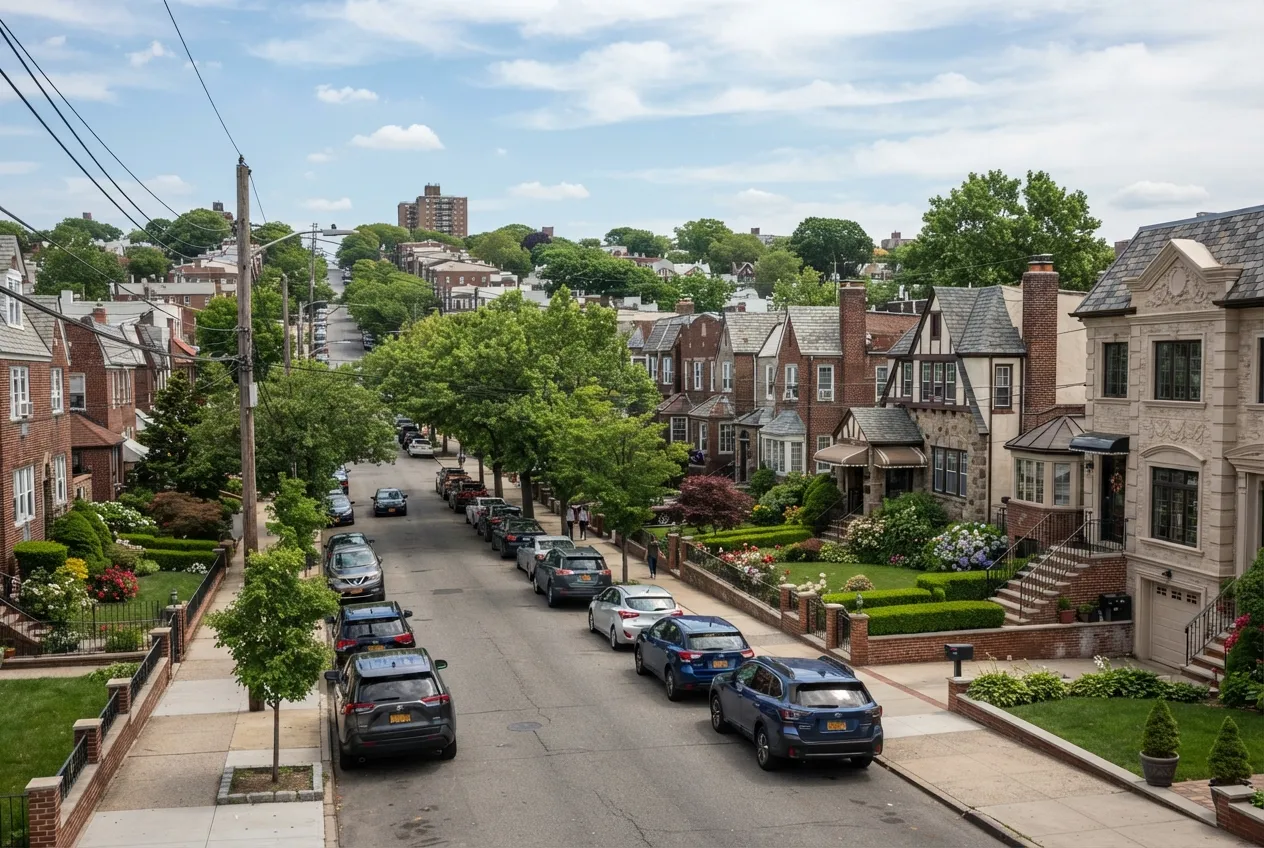
Dyker Heights has a mix of detached and semi-detached houses, rowhouses, two-family homes and some older apartment buildings. Many of these homes have been renovated over the decades. It is common to find a chimney that was built for one type of appliance now serving another. A yearly inspection catches the mismatches, wear and blockages that build up over time.
Choosing the right inspection level
Chimney professionals use three inspection levels. The right one depends on what has changed in your home since the chimney was last checked.
If you are buying or selling a home in Dyker Heights, plan on a Level 2 inspection. That way both sides understand the condition of the flue before closing.
- Level 1: For systems that have not changed. We examine the readily accessible parts of the chimney, the firebox or appliance connection, and the flue for obstructions and buildup.
- Level 2: Needed when the system changes, such as a new boiler, water heater or fireplace insert, or a switch of fuel. Also needed when the home is being sold. It adds a closer look at the flue interior, typically with a camera, plus accessible areas like attics and basements.
- Level 3: Used when a hidden hazard has to be reached by opening part of the chimney or the building. We recommend this only when earlier findings point to a problem that cannot be evaluated any other way.
Oil-to-gas conversions and chimney liners
Many Brooklyn homes and buildings have switched their boilers from oil to gas. In New York City, the chimney has to be evaluated as part of that work. Gas exhaust produces acidic condensate that can corrode a masonry flue, so a new liner is often needed.
Your conversion may have happened years ago, and no one may be sure whether the flue was lined. An inspection will answer that. We check whether a liner is present and whether it is the right type and size for the appliance. We also look for signs of deterioration, such as crumbling tile, staining or debris collecting at the base of the chimney.
What our technicians check
Every inspection is tailored to your home, but these are the areas we look at on most Dyker Heights chimneys:
After the inspection you get a clear written summary of what we found, with photos where they help. It includes our recommendations for repair, cleaning or simply keeping an eye on things.
- Chimney crown, cap and flashing, for cracks, gaps and water entry
- Exterior masonry and mortar joints
- Flue liner condition, sizing and continuity
- Creosote buildup in wood-burning flues
- Smoke chamber, damper and firebox
- Boiler and water heater connector pipes and where they join the flue
- Clearances to nearby wood framing, where visible
- Blockages from debris, animals or nests
Scheduling around heat season
New York City's heat season runs from October 1 through May 31. If you own a two-family home or a building with tenants, your heating system and its venting should be ready before that period starts. Booking your inspection in late summer or early fall leaves time for any repairs before the boiler is running every day.
We serve all of Dyker Heights and nearby neighborhoods, including Bay Ridge, Bensonhurst, Borough Park, Bath Beach and Sunset Park. Because we are close by, scheduling a follow-up visit for repairs or a camera inspection is usually straightforward.
More services in Dyker Heights
- Chimney Sweep in Dyker Heights
- Chimney Repair in Dyker Heights
- Air Duct Cleaning in Dyker Heights
- Chimney Liner Installation in Dyker Heights