
The short answer
If your Dyker Heights chimney has a cracked or deteriorated flue, or your boiler is converting from oil to gas, you likely need a new chimney liner. GoldenFlue inspects the flue, sizes a liner to your appliance, and installs it so exhaust leaves the house safely.
A chimney liner is the inner channel that carries smoke and exhaust gases up and out of your home while protecting the surrounding brick and framing from heat and corrosion. Many Dyker Heights homes were built with clay tile flues that have now been through decades of heating seasons, and some of those flues are no longer doing their job. GoldenFlue Chimney Services installs new liners for homes in ZIP code 11228 from our office in Bay Ridge, about a mile away. Our certified technicians inspect the existing flue, size a liner to the appliance it serves, and install it so your boiler, furnace, water heater, or fireplace vents the way it should.
Why Dyker Heights Homes Often Need New Liners
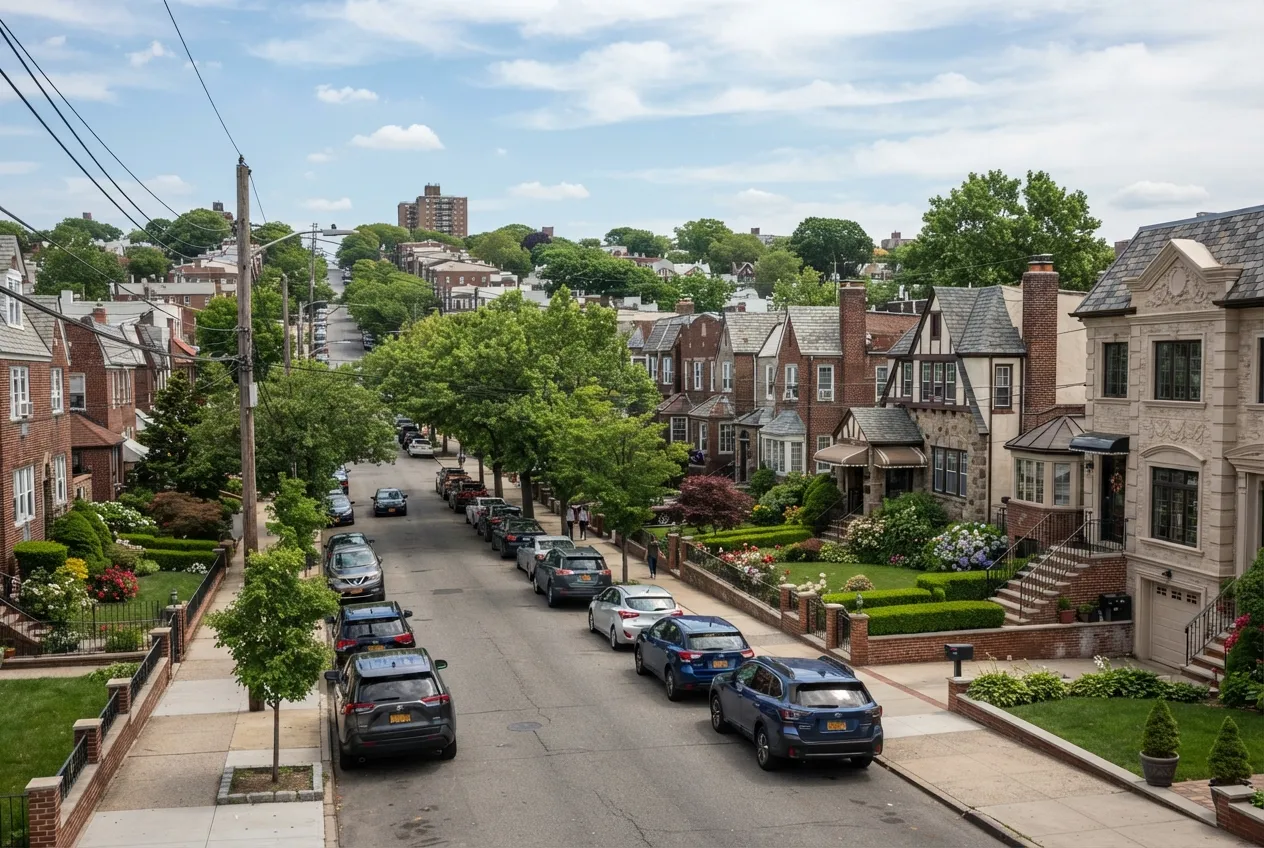
Dyker Heights is mostly detached and semi-detached houses, along with attached rowhouses and some small multi-family buildings. Many have masonry chimneys serving a boiler and water heater in the basement, and some also have a working fireplace upstairs. In older chimneys, the original clay tiles can crack, shift, or lose mortar at the joints after years of heating and cooling. Once that happens, the flue can no longer contain exhaust reliably.
Fuel conversions are another common reason. When a New York City building converts its boiler from oil to gas, the chimney has to be evaluated as part of the work, and a new liner is often needed. Gas exhaust produces acidic condensate that can corrode a masonry flue that handled oil without trouble for years. A properly sized liner gives that exhaust a smooth, corrosion-resistant path to the top of the chimney.
Signs Your Chimney Liner Needs Attention
Some liner problems can only be seen with a camera inspection, but these are common reasons homeowners call us:
- Pieces of clay tile or crumbling mortar showing up in the fireplace, cleanout door, or boiler breech
- Water stains, peeling paint, or damp spots on walls next to the chimney
- White staining (efflorescence) on the outside brick
- A boiler or water heater that has been replaced or switched to a different fuel
- An inspection report that mentions cracked tiles, gaps at joints, or an undersized flue
- Smoke or exhaust odors inside the house when the heat is running
How We Install a Chimney Liner
Every job starts with an inspection. Under the NFPA 211 standard, a Level 2 inspection is called for when the system changes, such as a new appliance or a switch of fuel, or when a home is sold. That usually includes a video scan of the flue so we can see its condition and measure it accurately.
- Inspect and photograph the existing flue, and explain what we found
- Match the liner size and material to the appliance or appliances it will serve
- Clean the flue and remove debris or broken tile where needed
- Lower the liner from the top of the chimney and connect it at the appliance
- Install a top plate and rain cap so water and animals stay out
- Check that the appliance drafts properly once everything is connected
Choosing the Right Liner for Your System
There is no single liner that fits every chimney. Stainless steel liners are the most common choice for gas and oil boilers and water heaters because they resist corrosion and can be fed down existing flues, including ones with slight offsets. Wood-burning fireplaces and stoves have different heat requirements, so the liner and any insulation are chosen with that in mind.
Size matters as much as material. A liner that is too large for a modern, high-efficiency boiler lets exhaust cool too quickly, which leads to more condensation. One that is too small can restrict draft. We size the liner based on the appliance specifications, not just the size of the old flue, and if two appliances share a chimney we confirm the setup works for both.
Planning Around Heat Season
New York City's heat season runs from October 1 through May 31, and owners of buildings with tenants must keep apartments heated to the city's minimum temperatures during that time. If you own a two-family house or a small building in Dyker Heights, scheduling liner work in late spring or summer avoids a heating interruption when tenants depend on it.
After installation, keep the chimney on a yearly schedule. NFPA 211 calls for chimneys, fireplaces, and vents to be inspected once a year, which helps catch loose connections, debris, or cap damage before they cause problems. We also serve nearby Bay Ridge, Bensonhurst, Borough Park, Bath Beach, and Sunset Park.
More services in Dyker Heights
- Chimney Sweep in Dyker Heights
- Chimney Inspection in Dyker Heights
- Chimney Repair in Dyker Heights
- Air Duct Cleaning in Dyker Heights