
The short answer
Clifton homeowners should have their chimney swept and inspected once a year, in line with the NFPA 211 standard, ideally before New York City's heat season starts on October 1. GoldenFlue's certified technicians clean fireplace, wood stove and boiler flues, then explain what they found in plain terms.
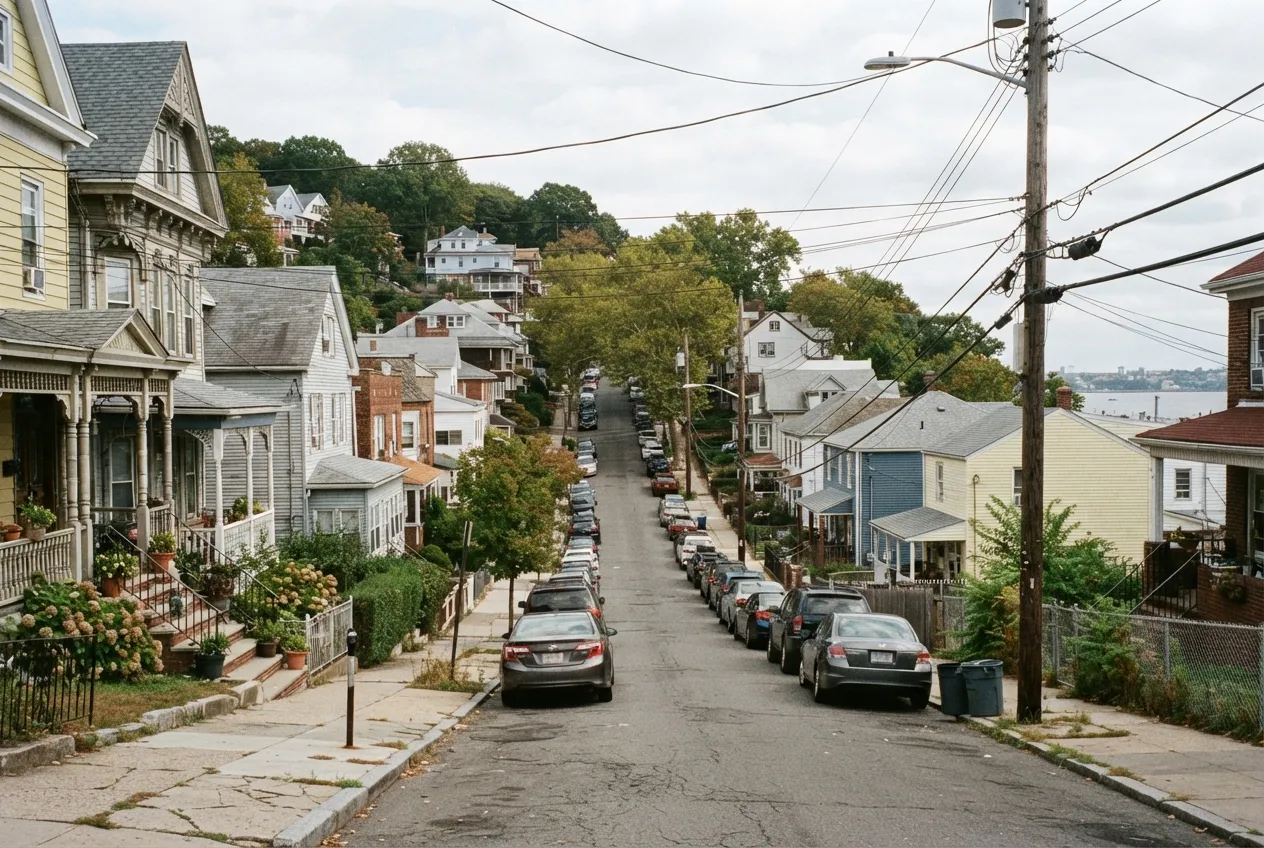
Clifton's homes range from older detached frame houses and rowhouses to multi-family buildings and pre-war apartment buildings, and many still rely on a chimney for a fireplace, a wood stove, or the exhaust from a boiler or furnace. GoldenFlue Chimney Services sends certified technicians from our Bay Ridge, Brooklyn office, about 3 miles away, to sweep and inspect chimneys throughout Clifton. We clean out the soot, creosote and debris that build up in a flue, check the parts you can't see from the living room, and tell you plainly what we found. This page covers what a sweep involves for Clifton homes, when to schedule one, and what to expect on the day.
Why Clifton Chimneys Need Regular Sweeping
Every fire or heating cycle leaves something behind in the flue. Wood fires deposit creosote, a tar-like residue that can harden into a glaze and catch fire if it builds up. Oil-fired boilers leave soot that can narrow the flue and affect how well the appliance drafts. Gas appliances burn cleaner but can still leave debris, and their exhaust creates moisture that wears on older masonry.
Many homes in Clifton are older, and older chimneys often have brick or clay tile flues that have been through decades of freeze-and-thaw cycles and salty air near the water. Loose mortar, cracked tiles and fallen debris can collect at the base of the flue or at the smoke shelf. Birds and squirrels also nest in uncapped chimneys. A sweep clears all of this out and gives the technician a clear view of the flue's condition.
What a Chimney Sweep Includes
We protect your floors and furniture first, then clean the flue from the bottom, the top, or both, depending on how your chimney is built and how safe the roof is to reach. A typical visit covers:
- Laying drop cloths and running a vacuum to keep soot out of the room
- Brushing the flue liner to remove soot, creosote and loose debris
- Cleaning the firebox, smoke chamber and smoke shelf on fireplaces
- Clearing out the connector pipe and base of the chimney on boiler and furnace flues
- Removing nesting material or other blockages when we find them
- Checking the damper, cap and crown for damage
- A Level 1 inspection of the readily accessible parts of the system
- A plain-language rundown of what we saw, with photos where they help
Inspection Levels and When You Need More
The NFPA 211 standard calls for chimneys, fireplaces and vents to be inspected once a year. Chimney professionals use three inspection levels. A Level 1 inspection fits most Clifton homes when nothing has changed since the last check. A Level 2 inspection is the right step when the system changes, such as adding a new appliance or switching fuel, or when the home is being sold. A Level 3 inspection is reserved for cases where a hidden hazard has to be reached by opening part of the chimney or building.
If your building is converting its boiler from oil to gas, the chimney has to be evaluated as part of that work. A new liner is often needed, because gas exhaust produces acidic condensate that can corrode a masonry flue. We can sweep the old oil soot out and inspect the flue so you know where things stand before the conversion moves forward.
Timing Your Sweep Around Heat Season
New York City's heat season runs from October 1 through May 31. During those months, building owners must keep apartments heated to the city's minimum temperatures. For owners of multi-family homes and apartment buildings in Clifton, that means the boiler and its chimney need to be ready before October. Scheduling a sweep in late summer or early fall leaves time to handle any repairs we find without pressure.
Homeowners who burn wood can have the chimney swept at the end of the season to remove creosote before humid summer weather makes the odor worse, or before the first fire of the fall. Either way works. What matters is that it happens once a year.
Serving Clifton and Nearby Staten Island Neighborhoods
Along with Clifton, our technicians regularly work in Tompkinsville, Stapleton, Rosebank, Shore Acres and Park Hill. The housing across these neighborhoods is similar: detached homes, attached rowhouses and older apartment buildings, many with original masonry chimneys serving fireplaces, stoves or central boilers. Whatever type of building you have, we'll schedule a time that suits you, arrive ready to protect your home, and leave you with a clear picture of your chimney's condition.
More services in Clifton
- Chimney Inspection in Clifton
- Chimney Repair in Clifton
- Air Duct Cleaning in Clifton
- Chimney Liner Installation in Clifton