
The short answer
Bath Beach homeowners should have their chimney inspected once a year, as the NFPA 211 standard recommends, and sooner if they change heating equipment, convert from oil to gas, or buy or sell the house. GoldenFlue's certified technicians perform Level 1, 2 and 3 inspections from our nearby Bay Ridge office.
Most Bath Beach homes have a chimney doing steady work: venting a boiler or water heater through the cold months, or serving a fireplace that gets used a few times a winter. Because a flue is hidden inside masonry, problems such as cracked liners, loose bricks, blockages and corrosion rarely show from inside the house. A chimney inspection gives you a clear picture of what is happening inside that flue. GoldenFlue Chimney Services is based in Bay Ridge, about two miles from Bath Beach, and our certified technicians inspect chimneys throughout the 11214 ZIP code. Below is what an inspection involves, which level fits your situation, and when to book one.
Why Chimneys in Bath Beach Need Regular Inspection
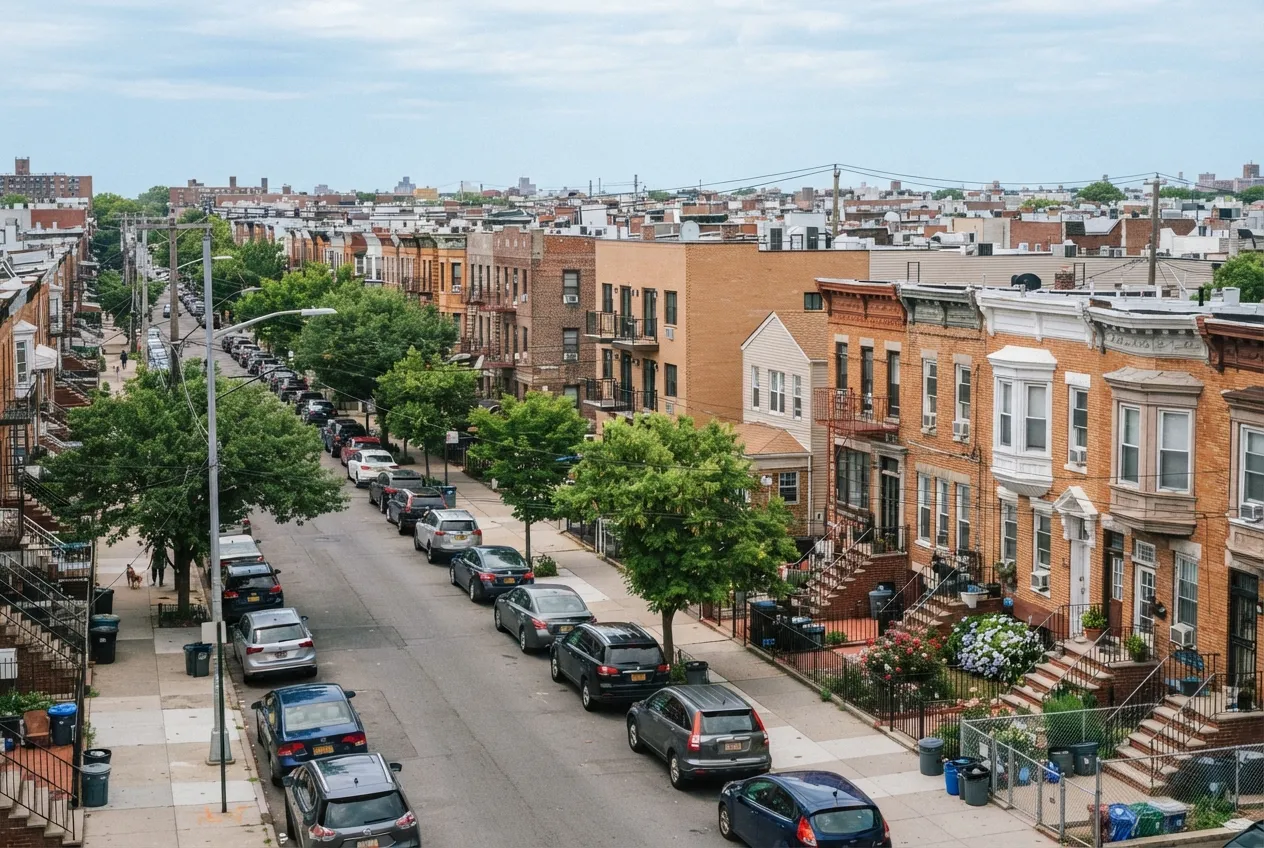
Bath Beach has a mix of rowhouses, two-family homes, detached houses and small pre-war apartment buildings. Many of these buildings have masonry chimneys that were built for coal or oil and now vent different equipment than they were designed for. Over decades, mortar joints weaken, flue tiles crack, and debris settles at the base of the chimney. You usually can't see any of this from the street or the basement.
The NFPA 211 standard calls for chimneys, fireplaces and vents to be inspected once a year. That applies whether you burn wood in a fireplace or only run a gas boiler. A gas appliance doesn't leave heavy soot, but its exhaust still has to leave the house safely. A blocked or deteriorating flue can push combustion gases back into living space.
- Cracked or missing flue tiles that let heat and exhaust reach the surrounding masonry
- Blockages from fallen brick, nesting animals or debris
- Deteriorated mortar, crowns and caps exposed to weather
- Corrosion from acidic condensate in flues serving gas equipment
- Creosote buildup in fireplace chimneys
Level 1, Level 2 and Level 3 Inspections
Chimney professionals use three inspection levels, and the right one depends on what has changed in your home. We'll recommend a level based on your situation instead of defaulting to the most involved option.
- Level 1: For a chimney whose use and equipment haven't changed. We check the readily accessible parts of the chimney, the appliance connection and the flue for obstructions and obvious damage.
- Level 2: Needed when the system changes, such as a new boiler or furnace or a switch to a different fuel, and when the home is sold. This includes a video scan of the flue interior and a look at accessible areas such as attics and basements.
- Level 3: Used when a hidden hazard is suspected and the only way to reach it is to open part of the chimney or building. This level is reserved for cases where earlier findings point to a concealed problem.
Oil-to-Gas Conversions and Chimney Liners
Many older Brooklyn buildings have switched their boilers from oil to gas. In New York City, the chimney has to be evaluated as part of that conversion. A new liner is often needed, because gas exhaust produces acidic condensate that can corrode an unlined or tile-lined masonry flue over time.
If you're planning a conversion, or one was done before you bought the house and you aren't sure the chimney was addressed, a Level 2 inspection will show the condition of the flue. It will also show whether the existing liner is suitable for the new equipment.
Timing Your Inspection Around Heat Season
New York City's heat season runs from October 1 through May 31. During that time, building owners must keep apartments heated to the city's minimum temperatures. If you own a two-family home or a small apartment building in Bath Beach and rent out units, your boiler and chimney need to be working reliably for that entire stretch.
Late spring and summer are practical times to schedule an inspection. Any repairs or relining can then be finished before the heating system is needed again in the fall. Homeowners who only use a fireplace occasionally can also benefit from an inspection before the first fire of the season.
What You Get After the Inspection
After the inspection, we explain what we found in plain terms. That includes photos or video of the flue interior when a camera scan was part of the visit. If the chimney is in good shape, we'll tell you so. If we find problems, we'll walk you through what needs attention now and what can be monitored, so you can make decisions with accurate information.
We also serve homeowners in nearby Bensonhurst, Dyker Heights, Bay Ridge, Borough Park and Sunset Park.
More services in Bath Beach
- Chimney Sweep in Bath Beach
- Chimney Repair in Bath Beach
- Air Duct Cleaning in Bath Beach
- Chimney Liner Installation in Bath Beach